
We're an award winning Antenatal and Postnatal Education Platform 2025!
(read more here)
CubCare blogs.
From early pregnancy to newborn development.
Advice to help through pregnancy, birth and childhood.
BLOG

Feeling out of breath at 5–8 weeks pregnant — should I be worried?
"Breathlessness early in pregnancy can throw people. You haven’t got a baby pressing on your lungs, nothing even looks different — but you’re halfway up the stairs, or mid-sentence, and you have to stop. Your body is moving quicker than your internal systems can catch up with, because they’re already working flat out with changes you can’t see yet." - Jilly Clarke, First Trimester Antenatal Specialist, Antenatal Educator and Doula
You’re halfway up the stairs and have to stop. You haven’t rushed. You’re not suddenly unfit. But your breathing suddenly doesn’t feel right.
You’re talking whilst folding the washing and run out of breath mid-sentence in a way you’ve never experienced before.
You’re standing still and becoming aware of your breathing, like it’s taking more effort than it did a few days ago.
You might take a deeper breath, then another, checking if it’s enough.
But your breathing doesn’t feel as easy as it did last week.
And it feels too early for that. It’s scary.
Your brain goes straight to:
Is something wrong?
Am I getting enough oxygen?
Should I be worried?
Why do I feel breathless so early in pregnancy? (quick answer)
Feeling breathless – or noticing a shortness of breath – in early pregnancy is common, even from 5–6 weeks.
It happens because progesterone changes how you breathe, your body needs more oxygen, and your cardiovascular system is already adapting — long before your uterus is large enough to affect your lungs.
This is where early pregnancy either starts to make sense — or keeps feeling uncertain
When symptoms are the only thing you've got to go on, everything feels reactive. The first trimester is a high anxiety rollercoaster of noticing a change in your body, googling and feeling settled until the next thing crops up.
You end up trying to piece pregnancy together from individual moments instead of actually understanding what's happening.
The First Trimester Course give you a clear structure for early pregnancy from the start. So, you're not constantly responding to symptoms, but understanding what your body is doing and what's coming next.
The First Trimester isn't something to survive through. It sets the tone for everything that follows.
→ View the First Trimester Course
Why you feel breathless at 5–9 weeks pregnant (even when your lungs are normal)
Progesterone changes how you breathe
Progesterone rises quickly in early pregnancy.
One of its effects is on your respiratory centre — the part of your brain that controls breathing.
It makes you breathe slightly deeper and more frequently — even when you’re sitting still and not aware of it.
Not enough for you to notice as “fast breathing” —
but enough that your body feels different.
That change can feel like:
• needing a deeper breath
• not quite getting a satisfying inhale
• becoming aware of your breathing in a way you weren’t before
Your body is already using more oxygen
From very early on, your body is working harder.
You’re supporting:
• early placental development
• increased blood volume
• rapid cellular growth
That increases your oxygen demand.
So even though your lungs are working normally, your body is asking for more — and you feel that as breathlessness.
You might find yourself taking a deeper breath, then adjusting your posture slightly without realising, trying to make the breath feel easier.
Your cardiovascular system is adapting early
Blood volume starts increasing early in pregnancy.
At the same time, blood vessels relax under the influence of hormones.
This combination means:
• blood pressure can drop slightly
• circulation is redistributed
• your heart works harder to maintain consistent oxygen delivery
This is why breathlessness often sits alongside:
→ Lightheaded in early pregnancy: why dizziness happens at 5–9 weeks
You’re not short of oxygen.
But your body is working harder to keep everything stable.

How the nervous system changes your breathing in early pregnancy
Early pregnancy doesn’t just change your organs. It changes how your nervous system communicates with them.
The autonomic nervous system — which controls breathing, heart rate, blood pressure and digestion — is adapting quickly to hormonal changes in early pregnancy, during the first trimester.
Progesterone affects the respiratory centre in the brain, but it also changes how your body responds to carbon dioxide levels in the blood.
That shifts your breathing pattern slightly, often without you consciously noticing it, until you do.
At the same time:
• blood vessels relax
• heart rate may increase
• blood pressure can fluctuate
Your body is constantly adjusting to maintain balance.
This combination can create a sensation of needing to “top up” your breath, even when your oxygen levels are normal.
For some people — particularly those with hypermobility — this overlap between circulation, nervous system and breathing can feel more pronounced.
→ POTS, dizziness and pregnancy with hypermobility explained
You don’t need to have POTS for this to happen.
But it helps explain why breathlessness can sit alongside:
• light headedness
• heart awareness
• needing to pause or reset
Multiple systems are adapting at the same time, and it’s a lot for your body to deal with. Sometimes it needs a little extra oxygen to maintain it’s momentum.

Why breathlessness feels wrong this early in pregnancy
At 5–9 weeks, there’s nothing externally to explain it.
Your abdomen hasn’t changed shape.
Your clothes still fit the same.
You’re likely still waiting for your first appointment.
So when your breathing changes, it doesn’t match what you can see.
You expect breathlessness later — when your body is physically bigger, when there’s pressure on your lungs.
Not now.
Not when everything still looks the same.
But this isn’t about space.
It’s about demand.
Your body is already working at a different baseline — using more oxygen, adjusting circulation, and changing how breathing is regulated.
You’re feeling the internal shift before anything external catches up.
When breathlessness is most noticeable in early pregnancy (and why)
Breathlessness tends to show up most when your body is already under slightly more demand.
You might notice it:
• halfway up the stairs, when your muscles are asking for more oxygen
• when talking while moving, where breathing and speech compete
• late in the day, when fatigue is already present
• when you haven’t eaten, and blood sugar is lower
• in warm environments, where circulation is already working harder
In each of these situations, your system is being pushed slightly further.
And because your baseline has already shifted in early pregnancy, you reach that point sooner than you expect.
How this breathlessness with other early pregnancy symptoms
You’ll often notice this alongside other changes happening at the same time.
You might also experience:
• fatigue → Why am I so tired at 5–8 weeks pregnant?
• changes in taste → Metallic taste in early pregnancy (5–9 weeks)
• gagging with brushing → Gagging when brushing teeth in early pregnancy
• fluctuating symptoms → Pregnancy symptoms coming and going
These symptoms often appear together because multiple systems are adjusting at once.
What helps with breathlessness in early pregnancy
You’re not trying to remove this completely. You’re trying to make it feel easier to manage.
Slow down transitions
Moving quickly from sitting to standing or walking can make it more noticeable.
Give your body a moment to adjust.
Eat and drink regularly
Low blood sugar makes breathlessness feel stronger. Even small, regular snacks can reduce that “off” feeling.
Dehydration can impact your body in more ways than you might realise too. Keep hydrated, and you’re giving your body the best opportunity to adjust with less struggle.
Adjust your position
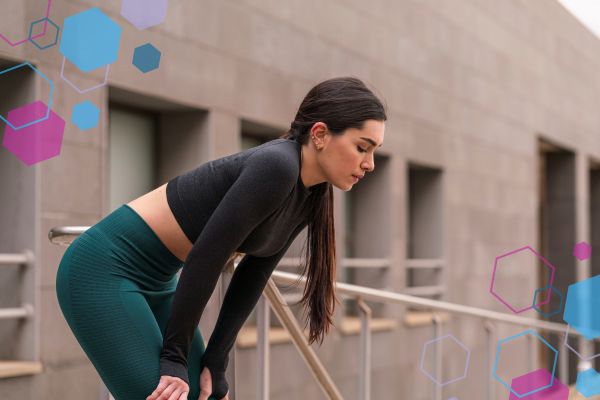
When your breathing feels restricted, posture makes a noticeable difference. When you’re tired, or in discomfort, it’s easy to adopt slumped positions, which makes getting oxygen into your body harder.
• sit upright with space through your chest
• avoid collapsing forward
• try a gentle forward lean with support
This gives your lungs more room to expand comfortably.
Keep movement gentle and regular
Avoiding movement completely can make it feel worse.
Gentle walking or light movement helps circulation and breathing settle. Often, moving your body and giving it a reason to breath a bit harder can improve efficiency. It allows your activity to match your body.
Is shortness of breath normal at 5–9 weeks pregnant?
Yes. Mild breathlessness in early pregnancy is common and expected.
It becomes something to check if:
• it comes on suddenly and severely
• you have chest pain
• you feel faint or unwell alongside it
• your heart is racing persistently
• you’re struggling to speak in full sentences
If something feels significantly different from what you’ve been experiencing, trust that and get it checked.
Contact your GP, midwife, or NHS 111.
Why feeling short of breath in the first trimester can be unsettling
Breathing is something you don’t usually think about.
So, when it changes — even slightly — it gets your attention quickly.
Especially this early, when you weren’t expecting your body to feel different yet.
It’s how suddenly it appears. And how early it happens.
Often, it’s when symptoms disappear or ease that we also worry that something has changed. This blog below explains a really common worry in early pregnancy.
→ My pregnancy symptoms disappeared overnight — should I worry?
How this fits into early pregnancy as a whole
Early pregnancy changes how your body functions before it changes how your body looks.
Breathlessness is part of that.
Once you understand what’s driving it, you stop second-guessing whether something is wrong — even if the sensation is still there.
If you want a clearer picture of how these changes build across weeks 4–12:
→ What happens in the first 12 weeks of pregnancy? Week-by-week body changes explained
You can get me, straight into your inbox, guiding you through symptoms as they crop up here → First Trimester: What’s normal, what’s checked, and what actually matters
Support that actually explains what’s happening in early pregnancy
If symptoms are your only reference point, this spiral keeps happening.
They change — and you’re straight back trying to work out what it means.
That feeling doesn’t disappear later.
You’re still second-guessing — just with different symptoms, different appointments, different decisions. At 20 weeks, at 25 weeks, at 32 weeks.
The First Trimester Course gives you a clear path from the start — so the rest of your pregnancy doesn’t feel like this.

Easily navigate to our most popular Blog categories
Download our Freebies
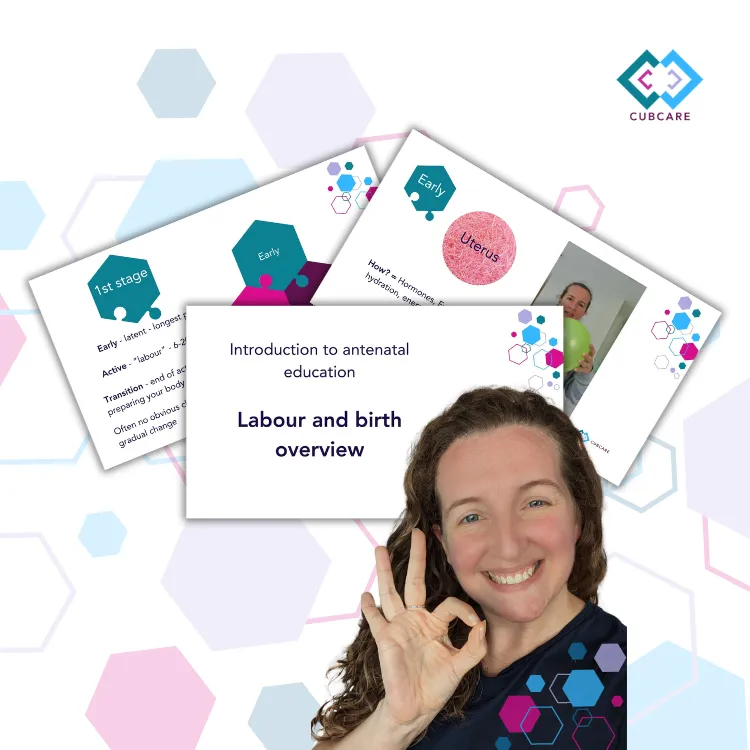
Labour and Birth
Watch our introduction to antenatal education webinar, our labour and birth overview - to start your antenatal education journey. Understanding the process, and what you can do to influence it.

Pregnancy Planner
Free Pregnancy Planner to help you prepare for a little one. Prepare your body, your mind, your finances and your home. Get organised, feel good and prepare for an active, positive birth.
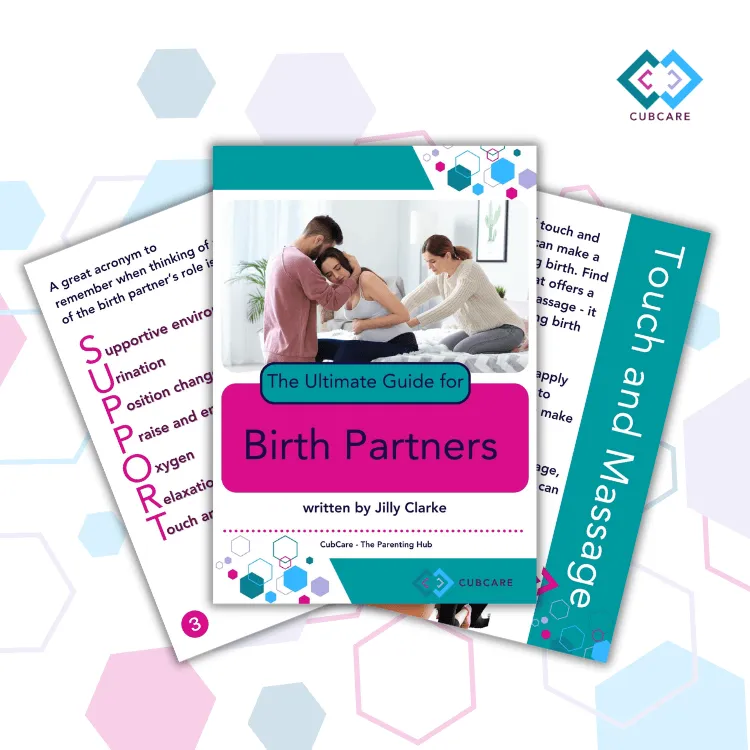
Birth Partner Guide
Your ultimate guide to being the best birth partner during pregnancy, birth and recovery. Learn what you need to do, and what you need to learn to be the best birth partner possible.
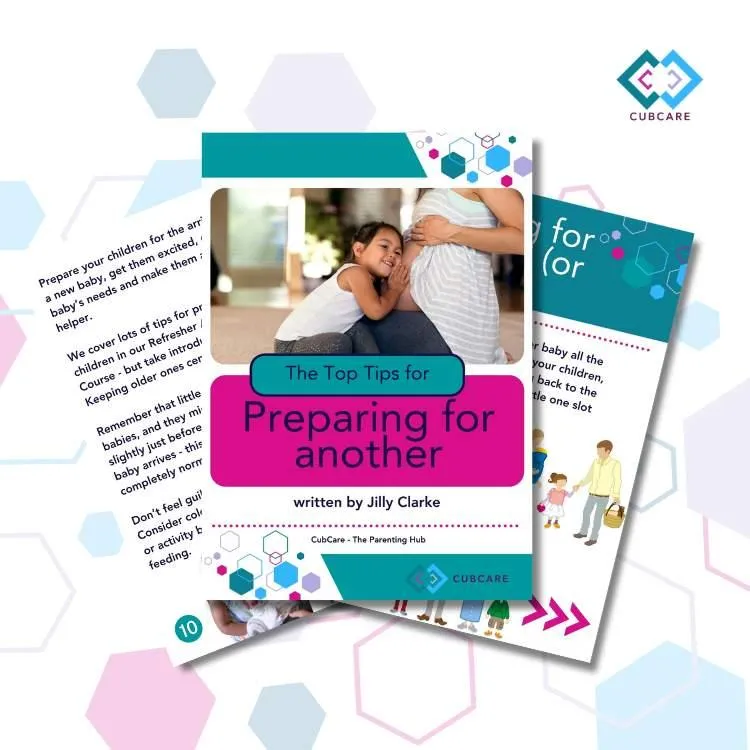
Expecting Again Guide
Your ultimate guide to preparing for another birth and an extra baby. Our top tips for navigating pregnancy and birth, and helping your older ones to transition into their new role as a big sibling.


Based in Welwyn Hatfield, offering local pregnancy support and doula services across Hertfordshire: St Albans, Hatfield, Welwyn Garden City, Potters Bar, Stevenage, Harpenden, Hitchin, Barnet, Mill Hill and surrounding areas.
Online antenatal and postnatal education available UK-wide.
© Copyright 2026 CubCare The Parenting Hub. CubCare is operated by The Birth and Baby Company Ltd. Company No. 15655287
Privacy Policy | Terms & Conditions | Medical Disclaimer | Inclusivity and Accessibility