
We're an award winning Antenatal and Postnatal Education Platform 2025!
(read more here)
CubCare blogs.
From early pregnancy to newborn development.
Advice to help through pregnancy, birth and childhood.
BLOG

Pregnancy symptoms coming and going in early pregnancy — normal at 5–9 weeks?
"One of the most unsettling parts of early pregnancy is how quickly symptoms can change. You can feel unmistakably pregnant one day — nauseous, exhausted, bloated — and then wake up the next morning wondering where it all went." - Jilly Clarke, First Trimester Antenatal Specialist, Antenatal Educator and Doula
One of the most confusing parts of early pregnancy is how inconsistent it can feel.
You might spend several days feeling completely wiped out — nauseous when you wake up, struggling through the afternoon, going to bed early because your body has simply had enough.
Then suddenly you wake up one morning and realise something has shifted. The nausea has eased. Your energy feels slightly better. You feel almost… normal.
And that change can send your brain straight into worry.
Is this a good day?
Or does it mean something has changed?
In early pregnancy, symptoms often rise and fall in ways that feel unpredictable.
Understanding why that happens makes those shifts far less frightening.
Pregnancy symptoms often come and go in early pregnancy because hormone levels rise in waves rather than smoothly. Nausea, fatigue, bloating and breast tenderness can fluctuate as your body adapts to progesterone and the developing placenta. Changes in symptoms alone are not a reliable sign of miscarriage — although heavy bleeding or severe pain should always be checked.
Why pregnancy symptoms can appear and disappear in early pregnancy
Hormones in early pregnancy do not increase in a straight, predictable line.
Levels of hCG, progesterone and oestrogen are rising rapidly, but they often do so in bursts. At the same time, your body is gradually adjusting to those hormones.
That combination means symptoms can behave in ways that feel inconsistent.
You might feel extremely sick for two or three days, then have a morning where nausea is noticeably quieter. Or fatigue might ease briefly before returning again later in the week.
I remember noticing this very clearly during my own first pregnancy. For some reason Wednesdays were the worst. I would feel noticeably sicker on that day each week, and by Thursday things often eased again. Eventually we noticed the pattern and would joke that baby was having a growth spurt that day!
Early pregnancy doesn’t always follow a rhythm you can predict. Several systems are adapting at once — hormones, digestion, circulation and the nervous system — and some days those adjustments land more heavily than others.
Why changing symptoms can feel frightening
Part of the difficulty is the meaning we attach to symptoms.
Many people are told — sometimes by friends, sometimes by the internet — that nausea is reassuring. That feeling sick means hormones are strong and pregnancy is progressing.
So when nausea disappears for a day or two, the reaction can be immediate.
Your stomach drops.
Your brain starts scanning your body for other signs.
You find yourself wondering whether you imagined the symptoms in the first place.
That response makes complete sense.
In early pregnancy symptoms are often the only signals you have. There’s no bump yet. Many people haven’t had their first scan. Private scans are often booked simply to quiet that uncertainty.
So when the signals change, it can feel like something important has shifted.
What matters to know is that symptom patterns alone cannot tell us whether a pregnancy is healthy.
They fluctuate far too much for that.
If symptoms have eased suddenly and it’s worrying you, this guide explains that specific situation in more detail:
→ Pregnancy symptoms disappeared overnight at 6–8 weeks — should I worry?

If fluctuating symptoms have you worrying, the First Trimester Course walks you through what’s common in weeks 4–12, what needs checking, and how to stop second-guessing every new sensation. And most importantly - giving you the structure and the knowledge as you move into mid-pregnancy and beyond.
→ View the First Trimester Course
Nausea can come and go in the first trimester
Nausea is one of the symptoms people worry about most when it changes.
Some mornings you might wake up feeling completely fine, eat breakfast without difficulty, and assume the sickness has gone.
Then by mid-afternoon the familiar queasy feeling creeps back in again.
That pattern is extremely common.
Hormone shifts, blood sugar changes, smell sensitivity and fatigue all influence nausea. Because those systems are still adjusting in early pregnancy, nausea rarely behaves consistently.
If you want a clearer explanation of what drives early pregnancy nausea — and why it fluctuates so much — this guide explains it in detail:
→ Morning sickness explained: why early pregnancy nausea happens and what helps
Fatigue, headaches and digestion can fluctuate too
Nausea isn’t the only symptom that changes day to day.
Several first-trimester symptoms often come and go, including:
Fatigue
Energy levels can shift dramatically as progesterone rises and circulation changes.
→ Why am I so tired at 5–8 weeks pregnant? First trimester fatigue explained
Headaches or dizziness
Blood pressure and hydration changes can trigger symptoms that appear intermittently.
→ Lightheaded in early pregnancy: why it happens at 5–9 weeks
Digestive symptoms
Bloating, abdominal pressure and constipation often vary depending on digestion and nervous system activity.
→ Early pregnancy bloating — why it starts so early and what’s happening in your body
Seeing these symptoms appear and disappear can feel confusing, but it reflects how many systems are adjusting at once.

When pregnancy symptoms coming and going is usually normal
Fluctuating symptoms are extremely common in the first trimester.
Many people notice that symptoms intensify for a few days and then ease again before returning later. Nausea might disappear for a day or two. Fatigue may lift briefly before settling back in again.
Changes are usually less concerning when:
• symptoms rise and fall rather than disappearing permanently
• there is no heavy bleeding
• pain is mild or occasional
• you still experience other pregnancy symptoms at times
Early pregnancy rarely feels stable because the body is adjusting to a completely new hormonal and metabolic environment.
Those adjustments often happen in phases, which is why symptoms can appear to settle and then return again later.
When symptom changes should be checked
Although symptom fluctuations are usually normal, there are situations where medical review is important.
Contact your GP, midwife or Early Pregnancy Unit if symptom changes are accompanied by:
• heavy bleeding
• severe abdominal pain
• persistent one-sided pain
• dizziness or fainting with pain
• fever
These combinations require assessment because they can indicate miscarriage or ectopic pregnancy.
Guidance on early pregnancy complications confirms that diagnosis depends on clinical assessment and ultrasound, not on the presence or absence of symptoms alone.
NICE guidance on ectopic pregnancy and miscarriage: https://www.nice.org.uk/guidance/ng126

Why understanding symptom fluctuations matters
The first trimester is often the most uncertain stage of pregnancy.
Your body is already changing dramatically, but there is often very little external confirmation that everything is progressing normally.
Symptoms become the signals you watch for.
When those signals change suddenly, it can feel alarming.
Understanding that symptoms naturally rise and fall in early pregnancy helps remove some of that uncertainty.
If you want a clearer overview of what’s happening inside your body between weeks four and twelve, this guide explains the physiology week by week:
→ What happens in the first 12 weeks of pregnancy?
You can also explore the full collection of early pregnancy explanations here:
→ First Trimester: What’s Normal, What’s Checked, and What Actually Matters
Support for navigating the first trimester
Symptoms appear quickly, disappear unexpectedly and often behave in ways no one warned you about.
The CubCare First Trimester Course was created to bring clarity to this stage.
Inside the course you’ll find:
• clear explanations of what’s normal in weeks 4–12
• guidance on symptoms that need medical review
• practical tools for nausea, fatigue and anxiety
• simple movement and breathing techniques to support your body
• a guide and a structure to start your pregnancy off confidently - knowing what's happening, who to ask if things feel strange, and what's important to get in place early, for the rest of pregnancy to feel easier.
It’s £29 with immediate access.
Because reassurance in early pregnancy shouldn’t depend on whether a symptom appeared today.
→ Explore the First Trimester Course
Refresher Antenatal Course in person
Refresher Antenatal Course online
Antenatal Course in person
Antenatal Course online

Easily navigate to our most popular Blog categories
Download our Freebies
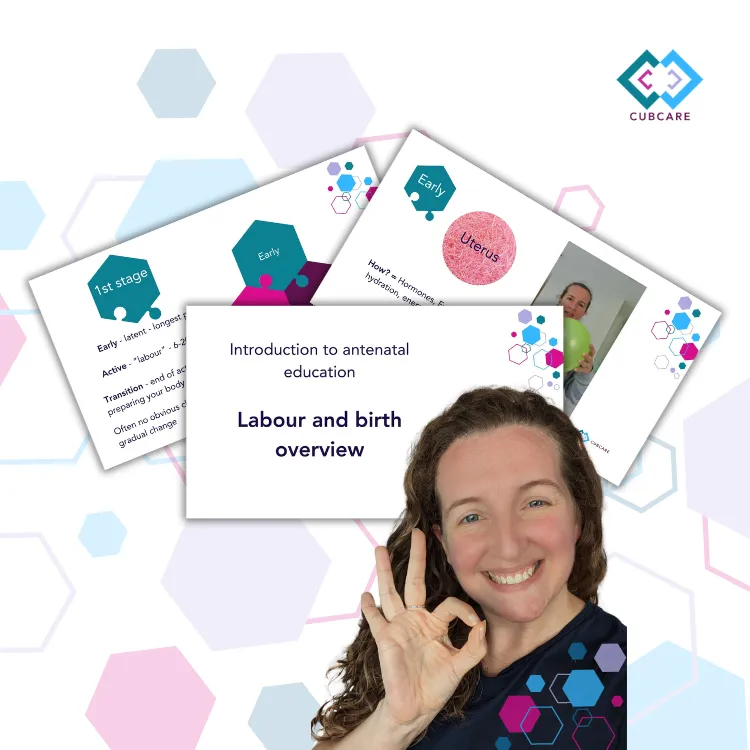
Labour and Birth
Watch our introduction to antenatal education webinar, our labour and birth overview - to start your antenatal education journey. Understanding the process, and what you can do to influence it.

Pregnancy Planner
Free Pregnancy Planner to help you prepare for a little one. Prepare your body, your mind, your finances and your home. Get organised, feel good and prepare for an active, positive birth.

Birth Partner Guide
Your ultimate guide to being the best birth partner during pregnancy, birth and recovery. Learn what you need to do, and what you need to learn to be the best birth partner possible.
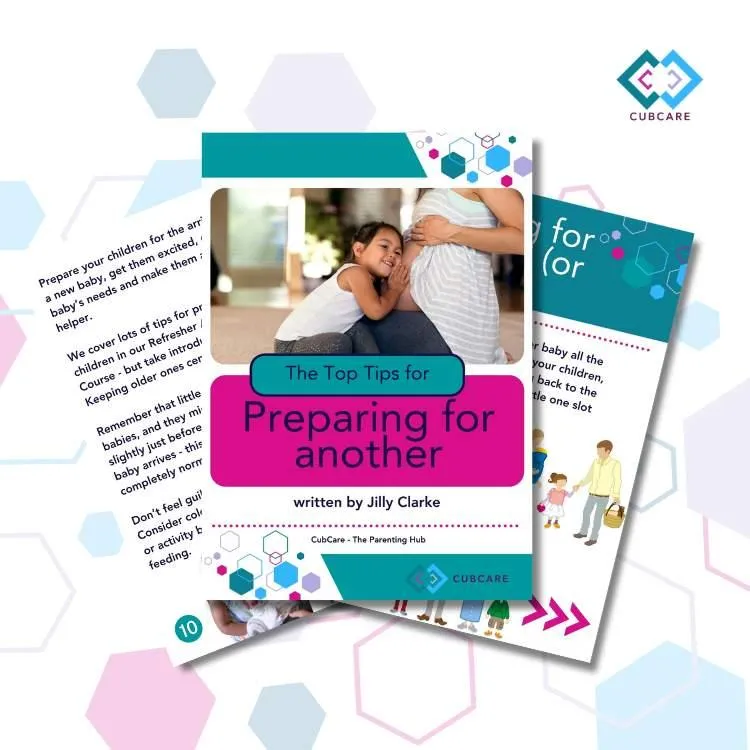
Expecting Again Guide
Your ultimate guide to preparing for another birth and an extra baby. Our top tips for navigating pregnancy and birth, and helping your older ones to transition into their new role as a big sibling.


Based in Welwyn Hatfield, offering local pregnancy support and doula services across Hertfordshire: St Albans, Hatfield, Welwyn Garden City, Potters Bar, Stevenage, Harpenden, Hitchin, Barnet, Mill Hill and surrounding areas.
Online antenatal and postnatal education available UK-wide.
© Copyright 2026 CubCare The Parenting Hub. CubCare is operated by The Birth and Baby Company Ltd. Company No. 15655287
Privacy Policy | Terms & Conditions | Medical Disclaimer | Inclusivity and Accessibility