We're an award winning Antenatal and Postnatal Education Platform 2025!
(read more here)
CubCare blogs.
From early pregnancy to newborn development.
Advice to help through pregnancy, birth and childhood.
BLOG
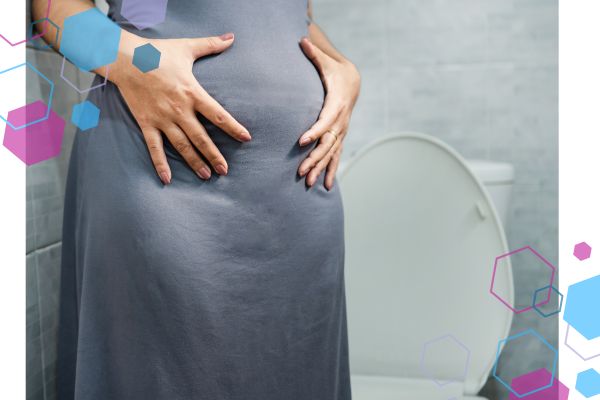
Early pregnancy bloating — why it starts so early and what’s happening in your body
"It’s so uncomfortable, isn’t it? Bloating in early pregnancy is relentless. It makes eating hard when you need to keep eating to stop the nausea — and that’s a miserable combination." - Jilly Clarke, First Trimester Antenatal Specialist, Antenatal Educator and Doula
At six weeks pregnant, your uterus is still small.
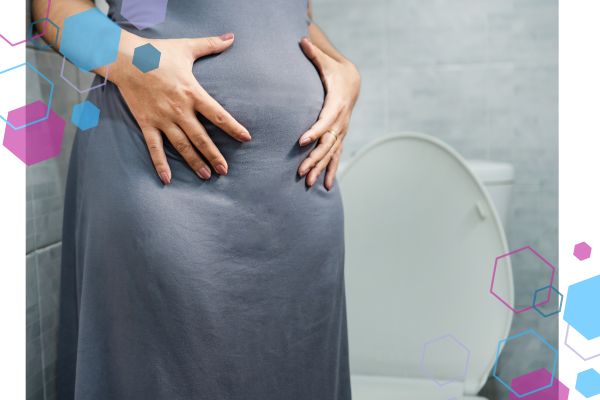
But by late afternoon your lower abdomen feels different. Heavier. Tighter under your clothes. You notice yourself adjusting waistbands, shifting position in your chair, pressing a hand there almost without thinking. As soon as you eat, your abdomen starts to feel like it’s filling with pressure.
What throws people is how early it happens.
You might still be waiting for your first appointment. You might not feel fully “pregnant” yet. But your body already feels altered.
Why does bloating start so early in pregnancy? (quick answer)
Bloating starts early in pregnancy because progesterone slows digestion. Food and gas move more slowly through the digestive system, creating pressure, fullness and visible abdominal expansion — often from as early as 5–6 weeks.
Why bloating starts in the first few weeks of pregnancy
Progesterone rises quickly in the first trimester. Its primary job is to stabilise the uterine lining and prevent contractions. But progesterone doesn’t only act on the uterus. It acts on smooth muscle throughout the body — including the muscle that moves food through your digestive tract.
When that movement slows, everything takes longer.
Food sits in the stomach longer before emptying.
Gas produced during digestion stays in the intestines longer.
The bowel stretches more than it usually would across the day.
Clinical research has consistently shown that gastric emptying and intestinal transit slow in pregnancy under the influence of progesterone and hormonal change. This isn’t subtle. It’s measurable and consistent across all populations.
And you feel it.
Not as pain.
As pressure.
As fullness.
As a sense that your abdomen has less give than it did a few weeks ago.
By evening, what you’re feeling is the slow layering of digestion across the day.
If bloating at 6 weeks has you spiralling, the First Trimester Course walks you through what’s common in weeks 4–12, what needs checking, and how to stop second-guessing every new sensation.
→ View the First Trimester Course
Why early pregnancy bloating feels worse by the end of the day
Bloating in early pregnancy tends to build during the day, and be at its worst in the evening.
You wake up having digested overnight. There’s space. Less pressure.
Then the day begins.
You eat — often cautiously, to manage nausea.
You sip fluids.
You swallow small amounts of air without realising.
Your gut moves more slowly than it used to.
By mid-afternoon, the combination of slowed digestion and gas production means the bowel is physically more distended than it was that morning. That distension presses outward against the abdominal wall, changing how your clothes sit and how your body feels to move.
That’s why evenings often feel hardest, because the bloating has built throughout the day.
Many early pregnancy symptoms naturally fluctuate from day to day. If you're noticing symptoms appearing, easing and then returning again, this guide explains why that happens.
→ Pregnancy symptoms coming and going in early pregnancy
The nausea–bloating trap nobody warns you about
Here’s where it becomes particularly frustrating.
Nausea improves when blood sugar stays steady. That usually means eating small amounts regularly.
But when your gut is moving slowly, each small meal adds to a system that hasn’t fully cleared the last one.
So you feel too full to eat.
But worse if you don’t.
This is why early pregnancy bloating can feel so demoralising. You’re trying to manage nausea responsibly, and your abdomen feels like it’s working against you.
It isn’t. It’s just slower.
Some people also notice a heavy, low-energy feeling alongside bloating in early pregnancy. This isn’t just digestion slowing down — your whole body is adjusting to hormonal and metabolic changes.
→ Why am I so tired at 5–8 weeks pregnant? First trimester fatigue explained
And if nausea is part of the picture too, you might also find this helpful: Morning sickness explained — why nausea happens in pregnancy and what actually helps
“I already look pregnant” — what’s actually changing at 6–8 weeks
As well as almost immediate bloating, breast changes often happen quickly in the first trimester. Increased oestrogen increases blood flow and glandular tissue growth. Many people notice fullness and tenderness within weeks.
At the same time, your lower abdomen feels expanded by evening.
That combination can feel disproportionate. As though your body is moving ahead of the timeline you expected. You know that baby is tiny, so why is your body reacting so strongly?
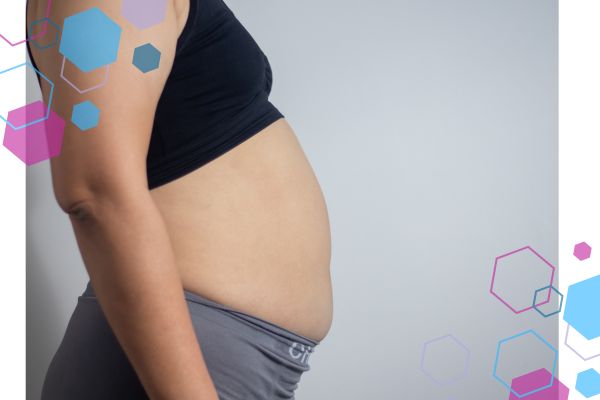
At 6–8 weeks, visible abdominal change is overwhelmingly digestive, not your uterus, not baby.
Understanding that doesn’t remove the fullness but it does stop you assuming something is progressing too fast.
If you want to understand how this fits into the bigger picture of weeks 4–12 — and what else is shifting in your body at the same time — this breakdown of first trimester changes will help:
→ What happens in the first 12 weeks of pregnancy? Week-by-week body changes explained

How your nervous system can amplify bloating
Early pregnancy doesn’t just change digestion. It changes how your body processes sensation.
Hormonal shifts influence the autonomic nervous system — the system that regulates digestion, heart rate, and stress responses. The gut and brain communicate constantly through the vagus nerve.
When you’re overtired, overstimulated, or under pressure, digestion becomes less coordinated. Muscle tone through the abdomen subtly increases. Gut sensitivity heightens.
That means:
• A long day can make bloating feel heavier.
• Poor sleep can make fullness feel sharper.
• Emotional strain can amplify physical sensation.
Not because the bloating isn’t real.
But because the nervous system is recalibrating in early pregnancy — and the gut is one of the systems most responsive to that shift.
This is why two days with identical food intake can feel physically different.
The nervous system and circulation are adapting rapidly during the first trimester. These changes can influence digestion, which contributes to bloating, and they can also cause episodes of light headedness in early pregnancy.
→ Lightheaded in early pregnancy: why dizziness happens at 5–9 weeks
How posture and pelvic pressure affect early pregnancy bloating
What can help ease the pressure:
When your abdomen feels distended, you unconsciously brace. You tighten through the lower ribs. You hold tension through the pelvic floor. You sit slightly collapsed to protect the area that feels uncomfortable.
That bracing increases abdominal pressure further.
Gentle movement (rocks, rotations, lengthening the body), side-lying rest, softening through the lower ribs and into your stomach area, and even simple pelvic tilts, shifts and rotations can reduce that internal pressure sensation.
When bloating is normal in early pregnancy — and when to call your midwife
Bloating on its own, even when uncomfortable, is common in the first trimester.
It becomes something to review when:
• The abdomen is rigid and severely painful.
• Pain is sharp and persistent rather than fluctuating.
• You have repeated vomiting and signs of dehydration.
• Bloating is accompanied by significant one-sided abdominal pain.
The reason these symptoms matter is that they can indicate conditions unrelated to normal hormonal slowing — such as infection, obstruction, or (rarely) ectopic pregnancy.
Most early pregnancy bloating does not present like that.
It rises and falls.
It’s uncomfortable.
It shifts with position.
It’s worse at the end of the day.
Understanding that pattern helps you differentiate discomfort from danger.
Digestive pressure can sometimes feel surprisingly localised though. Some people even notice pain on one side of the pelvis in early pregnancy, which can have several different causes. If the discomfort is moving around the abdomen and comes and goes in waves, it’s often digestive. If you ever are concerned, seek medical advice.
→ One-sided pain in early pregnancy: common causes at 4–8 weeks and when to get checked
What actually helps first trimester bloating
You can’t override progesterone. But you can support movement through the gut.
Gentle physical activity has been shown to improve gastrointestinal motility and reduce constipation in pregnancy. The Royal College of Gynaecologists and the UK Government continues to recommend moderate activity in uncomplicated pregnancies for this reason.
In practical terms, that means:
A short walk after meals. Not power walking. Just enough to stimulate movement.
Avoiding long stretches of sitting upright with the abdomen compressed. Slight forward lean or supported side-lying can reduce pressure.
Early pregnancy specific pregnancy yoga can make a big improvement in bloating and fullness.
Drinking consistently through the day. Even mild dehydration slows intestinal transit further. Being careful with taking large amounts of fluid in one go though as this can stress the stomach further.
Allowing small gaps between snacks rather than constant grazing, so the stomach has time to empty.
These are simple adjustments. They won’t remove bloating entirely. But they reduce the intensity.
Why understanding this changes how early pregnancy feels
Early pregnancy is often framed around scans and nausea.
What gets less attention is how quickly your body begins to change — and how destabilising that can feel when you weren’t expecting it yet.
When bloating is unexplained, it feeds uncertainty.
When it’s explained clearly, it becomes something you can work with.
The fullness might still be there, but it doesn’t feel alarming.
Calm, physiology-based support in the first trimester
Early pregnancy bloating is one part of a much bigger shift.
Inside the CubCare First Trimester Course, we go deeper into what’s changing week by week — digestion, circulation, fatigue, uterine sensation — so you understand your body early, not halfway through pregnancy.
And if movement feels like it might help, pregnancy yoga in the first trimester isn’t “too soon.” Gentle, supported movement can reduce abdominal pressure, improve circulation, and help your nervous system settle — which often eases bloating more than people expect.
If you’re in Hertfordshire then my Pregnancy Yoga classes in Welwyn Hatfield could be what you’re looking for. Just message me to let me know you’re local and in the First Trimester and I can send you something to work through before you join our classes.
Understanding your body early changes the whole experience.
Explore the First Trimester Course
Explore what happens to your body in the first trimester - blog
Take a look at our First Trimester Hub
Pregnancy Yoga Welwyn Hatfield, Herts

Easily navigate to our most popular Blog categories
Download our Freebies
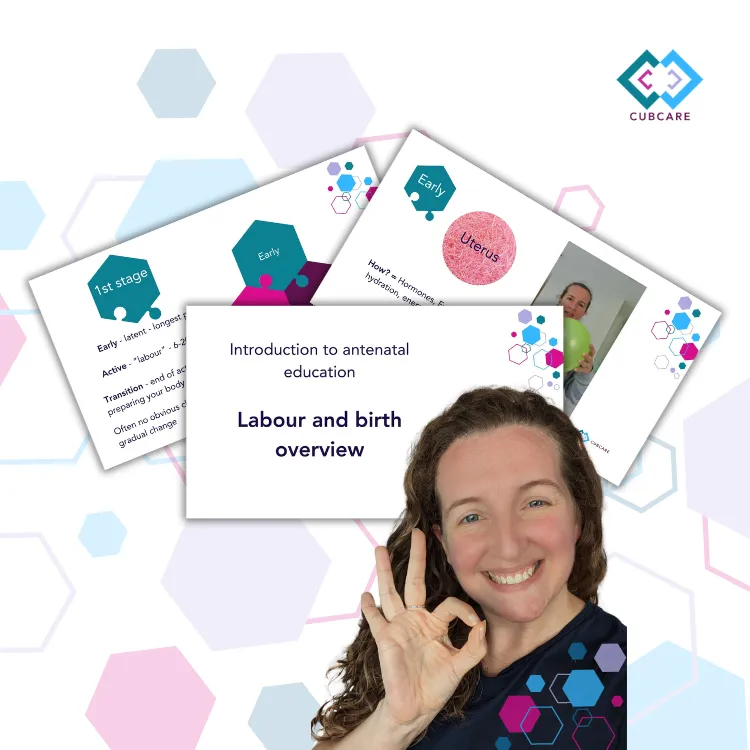
Labour and Birth
Watch our introduction to antenatal education webinar, our labour and birth overview - to start your antenatal education journey. Understanding the process, and what you can do to influence it.

Pregnancy Planner
Free Pregnancy Planner to help you prepare for a little one. Prepare your body, your mind, your finances and your home. Get organised, feel good and prepare for an active, positive birth.
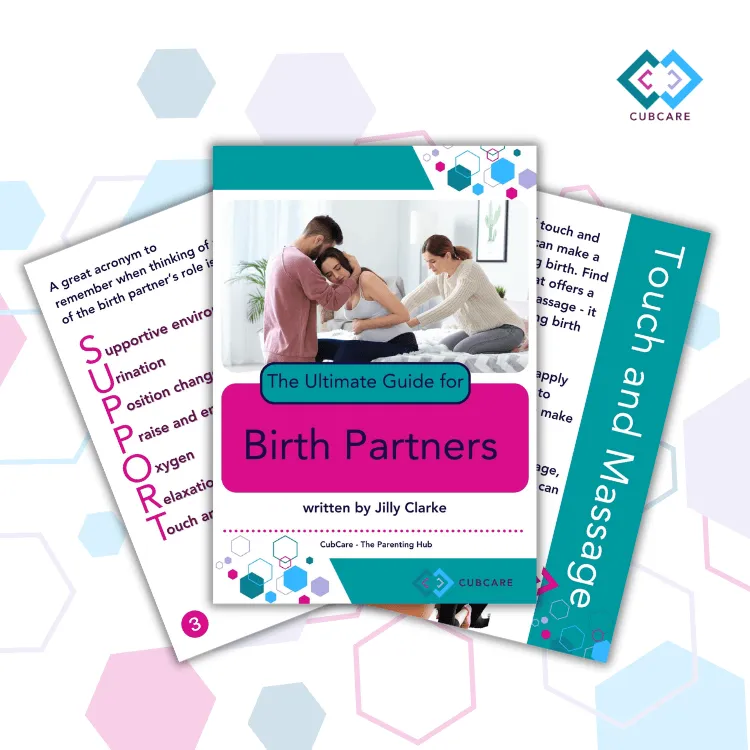
Birth Partner Guide
Your ultimate guide to being the best birth partner during pregnancy, birth and recovery. Learn what you need to do, and what you need to learn to be the best birth partner possible.
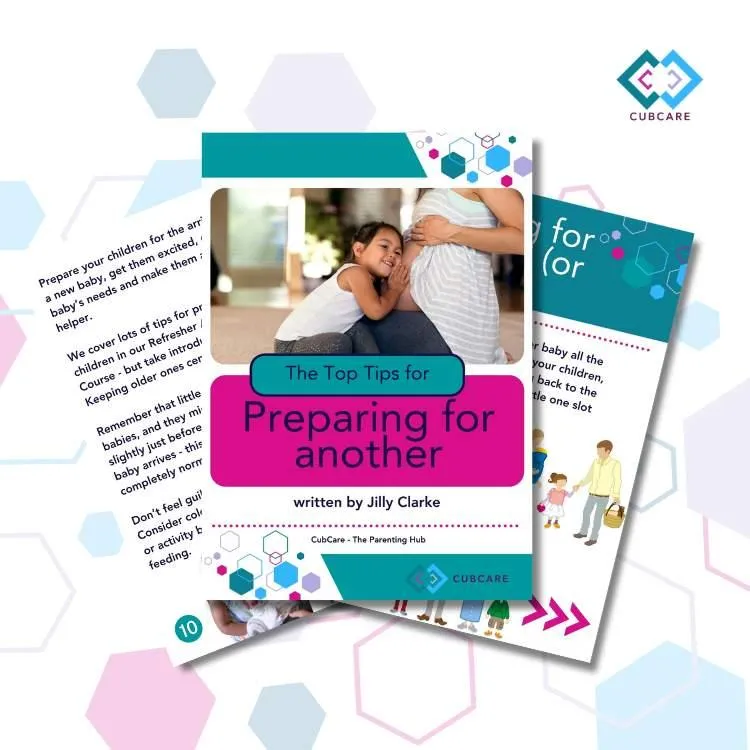
Expecting Again Guide
Your ultimate guide to preparing for another birth and an extra baby. Our top tips for navigating pregnancy and birth, and helping your older ones to transition into their new role as a big sibling.


Based in Welwyn Hatfield, offering local pregnancy support and doula services across Hertfordshire: St Albans, Hatfield, Welwyn Garden City, Potters Bar, Stevenage, Harpenden, Hitchin, Barnet, Mill Hill and surrounding areas.
Online antenatal and postnatal education available UK-wide.
© Copyright 2026 CubCare The Parenting Hub. CubCare is operated by The Birth and Baby Company Ltd. Company No. 15655287
Privacy Policy | Terms & Conditions | Medical Disclaimer | Inclusivity and Accessibility