We're an award winning Antenatal and Postnatal Education Platform 2025!
(read more here)
CubCare blogs.
From early pregnancy to newborn development.
Advice to help through pregnancy, birth and childhood.
BLOG
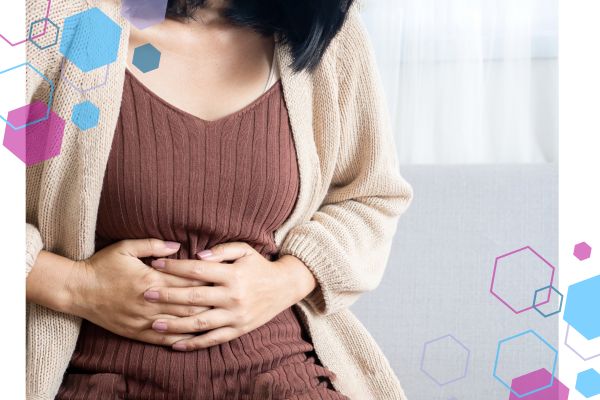
Early pregnancy cramps at 4–8 weeks: do they feel like period pain?
"The hardest part about early pregnancy cramps isn’t the pain, it's often all too familiar. It’s not knowing whether your body is stretching in ways you've never known before, or warning you that something is wrong. And medical professionals seem to brush you off." - Jilly Clarke, First Trimester Antenatal Specialist, Antenatal Educator and Doula
Cramping in early pregnancy can feel almost identical to period pain.
Low. Heavy. Pulling.
A dull ache across the pelvis.
Twinges on one side.
That dragging sensation that makes you pause and think: is this normal… or is something wrong?
If you’re 4–8 weeks pregnant and feeling cramps but no bleeding, you are not alone.
And in many cases, it is completely normal.
Why do cramps occur in early pregnancy, at 4–8 weeks?
Early pregnancy cramps at 4–8 weeks often feel like period pain because the uterus is growing, blood flow is increasing, and hormones are changing rapidly. Mild cramping without heavy bleeding is common in the first trimester. Severe pain, heavy bleeding, or persistent one-sided pain should always be checked.
Do early pregnancy cramps feel like period cramps?
Yes — they often do.
In the first trimester, your uterus is not sitting quietly waiting for a bump to appear.
It is thickening its muscle wall.
It is drawing in a significantly increased blood supply.
It is reshaping its lining to support placental development.
It is adjusting its position within the pelvis.
That kind of change creates sensation.
It can feel like:
• Mild to moderate cramping
• A heavy, full pelvic ache
• Pulling or stretching
• Intermittent twinges
The difference from a period?
Pregnancy cramps are usually:
• On and off
• Not progressively worsening
• Not rhythmic
• Not accompanied by heavy bleeding
They can be uncomfortable, but are not automatically dangerous.
Why cramping happens at 4–8 weeks pregnant
There are several common, non-dangerous reasons for cramps in early pregnancy.
Uterine growth and increased blood flow
By 5–6 weeks, blood flow to the uterus has already increased significantly. The uterine muscle thickens. The lining becomes highly vascular.
You may feel that as a deep, low ache. Not sharp. Not constant. Just present, that familiar ache - just coming from a different uterine process.
Early placental development
Placental tissue begins forming very early. Tiny finger-like structures embed into the uterine lining and connect into your blood supply.
That embedding increases circulation and sensitivity in the area.
You might feel it as a subtle pulling or low pelvic awareness — something quietly working in the background.
Progesterone and digestive overlap
Progesterone relaxes smooth muscle — including the bowel.
When intestinal movement slows:
• Gas builds
• Stool moves more slowly
• Pressure increases within the abdomen
That pressure sits right next to the uterus.
It can feel exactly like menstrual cramping.
Gastrointestinal slowing under progesterone influence is well recognised in pregnancy care guidance, including RCOG clinical guidance on nausea and vomiting in pregnancy:
If bloating is part of what you’re feeling, this may help: Is bloating normal at 6 weeks pregnant?
Ligament adaptation earlier than expected
Your uterus is suspended in the pelvis by ligaments — including the round ligaments, which run from the uterus into the groin.
As the uterus grows, even slightly, those ligaments begin to stretch.
That stretch can feel like:
• A sudden sharp stitch when you roll in bed
• A brief stab when you stand up quickly
• A pulling down into the groin
It’s often one-sided. It lasts seconds. It’s positional.
What makes it frightening is how sharp it can feel compared to how early you are. But it isn’t dangerous, it's your connective tissue adjusting.
Early pregnancy cramps but no bleeding — is that normal?
In many cases, yes.
Mild to moderate cramping without bleeding is common in the first trimester.
More reassuring patterns include:
• Cramps that ease with rest
• Pain that isn’t intensifying
• No wave-like pattern
• No heavy bleeding
• No persistent one-sided pain
Cramping alone is not a reliable sign of miscarriage.
If you are experiencing any brown discharge and spotting, this blog may help: Brown discharge at 4–8 weeks pregnant: normal spotting or miscarriage?
If you’re also noticing symptom changes, this may help: Pregnancy symptoms disappeared overnight at 6–8 weeks — should I worry?
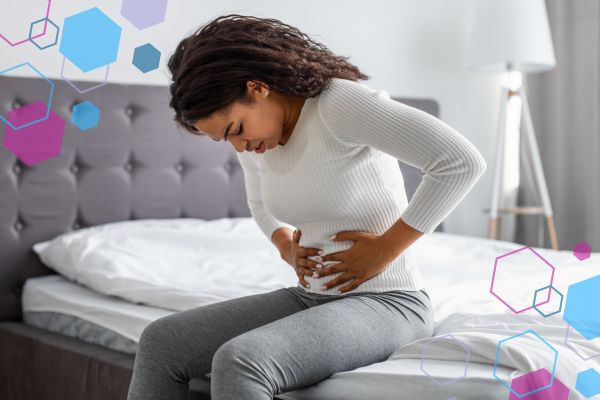
When are early pregnancy cramps not normal?
Here’s the line between uncomfortable and concerning.
Seek urgent medical advice if cramps are accompanied by:
• Heavy bleeding (soaking a pad)
• Severe or worsening pain
• Persistent one-sided pain
• Shoulder tip pain
• Feeling faint or dizzy
• Fever
NICE guidance on ectopic pregnancy and miscarriage confirms diagnosis relies on clinical assessment and ultrasound criteria — not cramping alone.
If you are unsure, you are allowed to seek reassurance.
Why cramps feel so unsettling in early pregnancy
For years, cramps have meant one thing — your period is coming. So, when you feel that same low ache in early pregnancy, your nervous system reacts before logic has time to catch up.
Even if you know the uterus is growing; even if there is no bleeding.
Early pregnancy offers very little visible reassurance. Often no scan yet — unless you’ve paid privately for one to ease the anxiety.
So your body becomes your only source of information. Of course you are hyperaware. You are navigating a stage where interpretation carries weight.

How to ease early pregnancy cramps safely
If cramps are mild and not accompanied by red flags:
• Rest on your side with support under your abdomen
• Use gentle warmth
• Stay hydrated
• Keep bowels moving
• Try gentle pelvic mobility or slow walking
Breathing into your lower ribs — allowing the abdomen to soften instead of brace — can reduce muscular guarding that intensifies discomfort.
Inside the First Trimester Course, I teach how to do this properly. Not generic deep breathing — but breath that supports pelvic circulation and reduces tension through the lower abdomen.
We also cover safe, early pregnancy movement.
Movement does not cause miscarriage in an uncomplicated pregnancy.
And often, a slow walk or small pelvic shift eases discomfort not because you forced it away — but because you stopped holding tension around it.
What most people aren’t told about first trimester cramps
In the first trimester, your uterus is doing far more than most people realise.
It’s thickening.
It’s increasing its blood supply.
It’s reshaping its lining.
It’s anchoring placental tissue.
It’s subtly shifting position.
That creates sensation. An awareness. A heaviness, a low ache, a pulling when you move quickly.
The problem is not that cramps exist. The problem is that no one explains why they exist. So, every sensation feels like a warning. Mild, fluctuating cramps in early pregnancy are usually a sign of normal, physiological change deep within your body.
Severe, escalating, or combined symptoms deserve assessment.
Those two truths sit side by side.
Understanding first trimester symptom patterns week by week
If you want to understand what’s happening across weeks 4–12 — and how symptoms naturally rise and fall during this stage — this guide walks you through it week by week:
→ What happens in the first 12 weeks of pregnancy? Week-by-week body changes explained
And if you’re trying to work out what’s common in early pregnancy and what needs checking, you can explore the full overview here:
→ First Trimester: What’s normal, what’s checked, and what actually matters
Support for the first trimester when symptoms fluctuate
The first trimester can feel like an emotional rollercoaster — especially when symptoms shift without warning.
The CubCare First Trimester Course exists for exactly this stage.
It gives you:
• Clear context for what’s normal
• Guidance on what needs medical input
• Practical tools for nausea, fatigue and anxiety
• Week-by-week structure so you’re not guessing
It’s £29. Immediate access.
Because reassurance shouldn’t depend on whether you felt sick that morning.
→ Explore the First Trimester Course
Explore what happens to your body in the first trimester - blog
Take a look at our First Trimester Hub
Refresher Antenatal Course in person
Refresher Antenatal Course online
Antenatal Course in person
Antenatal Course online

Easily navigate to our most popular Blog categories
Download our Freebies
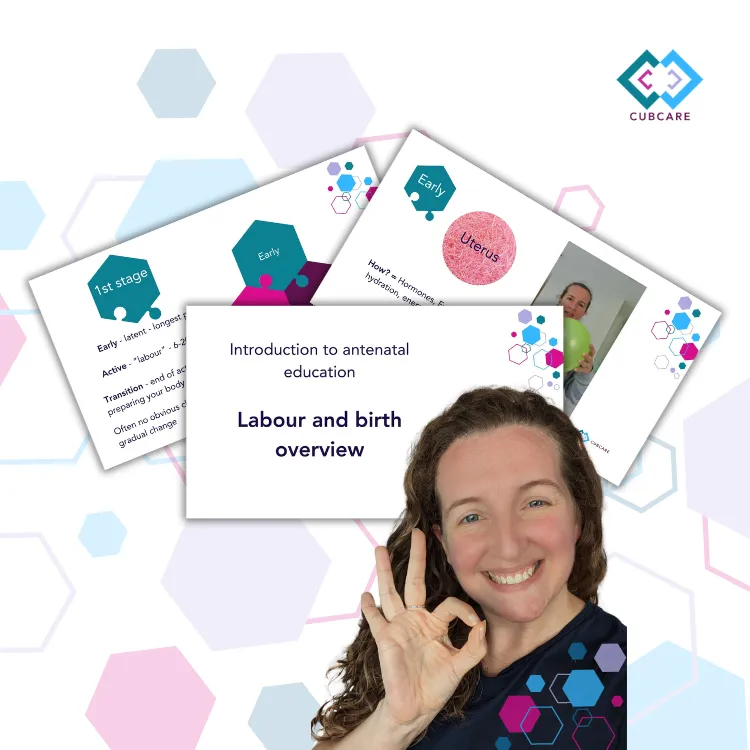
Labour and Birth
Watch our introduction to antenatal education webinar, our labour and birth overview - to start your antenatal education journey. Understanding the process, and what you can do to influence it.

Pregnancy Planner
Free Pregnancy Planner to help you prepare for a little one. Prepare your body, your mind, your finances and your home. Get organised, feel good and prepare for an active, positive birth.
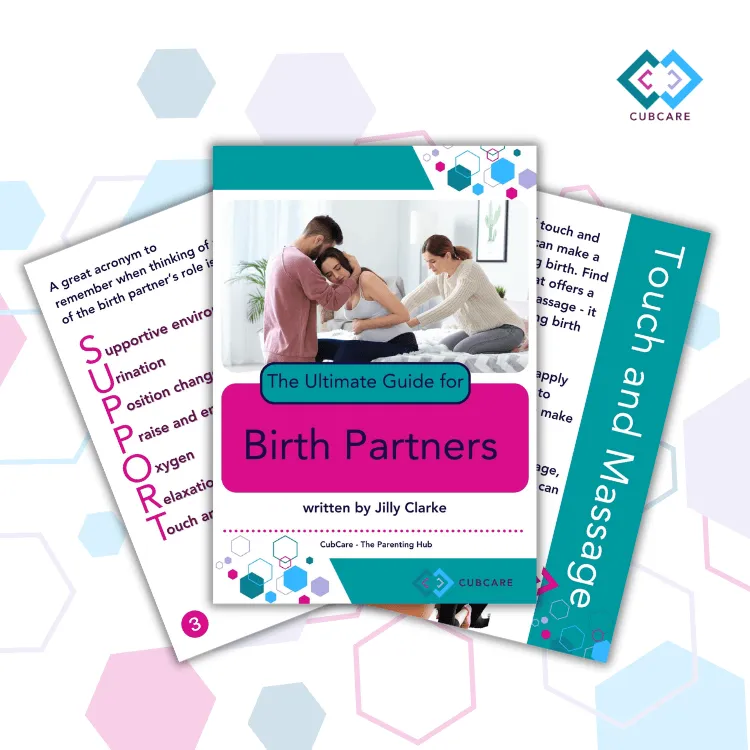
Birth Partner Guide
Your ultimate guide to being the best birth partner during pregnancy, birth and recovery. Learn what you need to do, and what you need to learn to be the best birth partner possible.
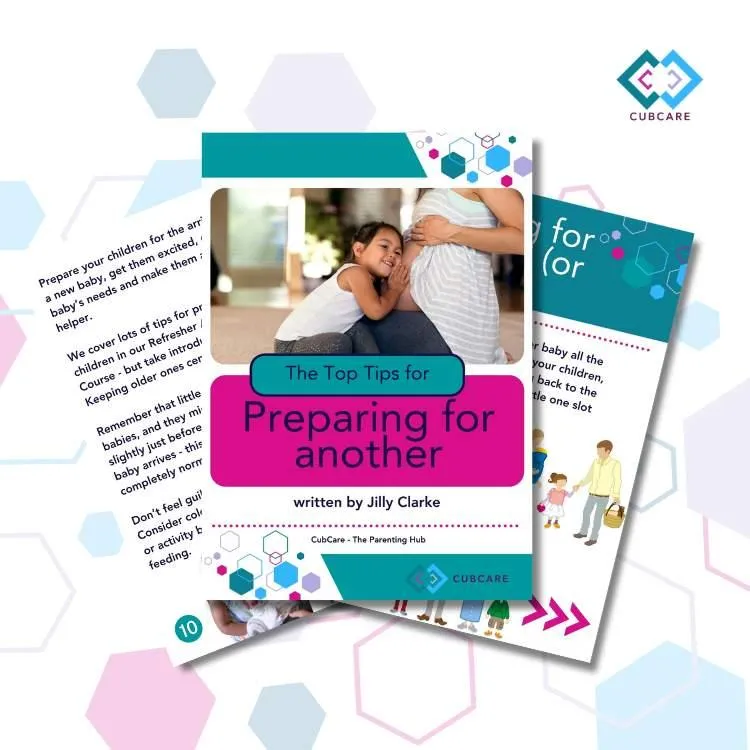
Expecting Again Guide
Your ultimate guide to preparing for another birth and an extra baby. Our top tips for navigating pregnancy and birth, and helping your older ones to transition into their new role as a big sibling.


Based in Welwyn Hatfield, offering local pregnancy support and doula services across Hertfordshire: St Albans, Hatfield, Welwyn Garden City, Potters Bar, Stevenage, Harpenden, Hitchin, Barnet, Mill Hill and surrounding areas.
Online antenatal and postnatal education available UK-wide.
© Copyright 2026 CubCare The Parenting Hub. CubCare is operated by The Birth and Baby Company Ltd. Company No. 15655287
Privacy Policy | Terms & Conditions | Medical Disclaimer | Inclusivity and Accessibility