
We're an award winning Antenatal and Postnatal Education Platform 2025!
(read more here)
CubCare blogs.
From early pregnancy to newborn development.
Advice to help through pregnancy, birth and childhood.
BLOG

Brown discharge or spotting in early pregnancy (4–8 weeks): is this normal or miscarriage?
"When you see brown discharge in early pregnancy, there’s a split second before you think logically. Your stomach drops, your chest tightens, and your mind jumps straight to the worst possible explanation." - Jilly Clarke, First Trimester Antenatal Specialist, Antenatal Educator and Doula
You go to the toilet and notice it straight away.
Not bright red.
Not heavy.
Just brown.
Enough to make you pause.
And before you’ve even fully processed the colour, your body has already reacted. Your stomach sinks. Your mind starts scanning the last few days. You check again. You look for more.
Brown spotting in early pregnancy happens more often than most people realise. Around one in four pregnancies involve some bleeding in the first trimester, and many of those pregnancies continue normally.
But statistics rarely calm the moment when you see colour.
Because you’re not thinking about averages. You’re thinking about this pregnancy.
Brown discharge early pregnancy — normal or miscarriage?
Brown spotting at 4–8 weeks is often old blood leaving the uterus. Light spotting without increasing bleeding or significant pain is common, but heavier bleeding, strong pain, or one-sided pain should always be assessed.
What brown spotting or discharge actually means in early pregnancy
Brown spotting, or discharge is usually blood that has been sitting inside the uterus or vagina for a little while before leaving the body.
You don’t see it immediately when it happens.
You see it later — when you go to the toilet, when you wipe, sometimes hours after whatever caused it.
That delay is what makes it look different.
When bleeding happens quickly, it appears bright red because it exits the body immediately.
When a small amount of bleeding occurs and takes longer to come out, the blood darkens as it is exposed to oxygen. By the time you see it, it can appear brown.
So brown discharge does not necessarily mean something is actively bleeding in that moment.
Often it reflects something small that happened earlier — perhaps a tiny vessel breaking as the placenta begins forming, or minor irritation of the cervix — and the body is simply clearing it now.
What usually matters more is the pattern: how much bleeding there is, whether it increases, and whether other symptoms appear alongside it.
If you’d rather not read, I’ll talk you through this here.
If you're trying to work out if this is ok or not
If you’re reading this and trying to decide whether what you’re seeing is ok — or whether you should be worried — it’s very easy to end up using symptoms as your only reference point.
But symptoms change — and they don’t always give you a clear answer.
The First Trimester Course gives you a way to understand what’s happening from the start — so you’re not left trying to figure this out on your own.
→ View the First Trimester Course

Is brown spotting normal at 4–8 weeks pregnant?
In many cases, yes.
Light brown spotting during the first trimester is common and frequently resolves without affecting the pregnancy.
Early pregnancy brings rapid changes to the uterus and cervix. Blood flow to the reproductive organs increases dramatically, and tissues become softer and more sensitive.
Small amounts of bleeding can occur more easily during this time.
Spotting tends to be more reassuring when:
• it is light rather than heavy
• it appears brown or pink rather than bright red
• it does not increase over time
• it is not accompanied by significant pain
Even when spotting is common, though, it can be a scary discovery when it happens.
Common causes of brown spotting in early pregnancy
Implantation and early placental development
Very early in pregnancy, placental tissue begins embedding into the uterine lining.
This process involves tiny blood vessels connecting to the maternal blood supply. Occasionally small vessels break as this development happens.
When the resulting blood leaves the body slowly, it can appear brown.
Cervical sensitivity
In early pregnancy the cervix becomes softer and more vascular because of rising hormone levels.
This makes it easier for minor bleeding to occur after:
• sex
• cervical swabs
• internal examinations
• straining during constipation
Because the bleeding is usually very small, it often appears as brown spotting later.
Subchorionic haematoma
Sometimes a small pocket of blood forms between the gestational sac and the uterine wall. These are called subchorionic haematomas.
Many are discovered incidentally on early scans and resolve without intervention.
Bleeding from these areas can appear as brown spotting, because that blood has been there a while by the time it leaves the body.
Hormonal fluctuations
Hormone levels shift significantly in early pregnancy as the placenta gradually takes over hormone production from the ovaries.
During these shifts, some people notice light spotting around the time their menstrual cycle would previously have occurred.

Brown discharge but no cramps — is that reassuring?
Often it is.
Spotting without significant pain is more commonly associated with benign causes than miscarriage.
However, symptoms in early pregnancy are unreliable indicators on their own. Some miscarriages occur without significant pain initially, while many normal pregnancies involve cramping or spotting.
A scan and overall symptom pattern will always give clearer information than one symptom on its own.
If you are suffering with cramps alongside spotting, as well as seeking medical advice, it might be worth taking a read of this blog – occasionally, symptoms occur at the same time, for different reasons.
→ Cramping at 5–6 weeks pregnant but no bleeding
Contact your GP or Early Pregnancy Unit if bleeding occurs alongside persistent one-sided pelvic pain in early pregnancy, severe abdominal pain, or dizziness.
→ One-sided pelvic pain in early pregnancy
If you have also noticed sudden changes in nausea or fatigue, you may find this helpful:
→ sudden loss of pregnancy symptoms at 6–8 weeks
It’s very common for early pregnancy symptoms to fluctuate rather than progress in a straight line. Breast tenderness, nausea and fatigue can all ease for a while before returning later.
→ Pregnancy symptoms coming and going: why early pregnancy symptoms fluctuate
When brown spotting needs medical assessment
Although brown spotting is often harmless, certain combinations of symptoms require urgent medical review.
Contact your GP, midwife, or Early Pregnancy Unit if you experience:
• heavy bleeding that soaks a pad
• severe abdominal pain
• persistent one-sided pelvic pain
• shoulder tip pain
• feeling faint or dizzy
• fever
These symptoms can indicate miscarriage or ectopic pregnancy and should always be assessed.
NICE guidance confirms that diagnosis of early pregnancy complications relies on clinical assessment and ultrasound findings rather than bleeding alone.
If you are unsure, it is appropriate to seek reassurance. You do not need to wait until something becomes severe.

Why spotting can feel so frightening in early pregnancy
For most people, bleeding has always meant the end of something.
For most people, bleeding has always meant the end of a cycle. Either that familiar period starting, or maybe you have a past miscarriage that you're still carrying, emotionally. So, it makes sense that even light spotting can trigger an immediate sense of alarm.
In the first trimester there is often very little external reassurance. There may not yet have been a scan. Unless you have paid privately for early imaging, the pregnancy can still feel abstract.
When there is no visible bump and no regular monitoring yet, every physical change carries weight.
Your body becomes the main source of information.
That is why even a small change — a smear of colour, a different sensation — can feel significant.
How long brown spotting usually lasts
When spotting is caused by minor bleeding or cervical irritation, it is often:
• light
• intermittent
• short-lived
You might see it once and never again. Or it shows up for a couple of days and then stops completely.
Bleeding that becomes heavier, turns bright red, or is accompanied by increasing pain should always be assessed.
Understanding what is happening in early pregnancy
Spotting can feel less frightening when you understand what your body is actually doing during these early weeks.
The uterus is thickening.
Blood supply to the pelvis is increasing.
Placental tissue is embedding.
Hormones are shifting dramatically.
If you want to understand what’s happening across weeks 4–12 — and how symptoms naturally rise and fall during this stage — this guide walks you through it week by week:
→ What happens in the first 12 weeks of pregnancy? Week-by-week body changes explained
And if you’re trying to work out what’s common in early pregnancy and what needs checking, you can explore the full overview here:
→ First Trimester: What’s normal, what’s checked, and what actually matters
Common questions about brown discharge in early pregnancy
Is brown discharge at 6 weeks pregnant normal?
Light brown spotting at 6 weeks can be normal in early pregnancy, particularly if it is brief, does not increase, and is not accompanied by severe pain. It often represents a small amount of blood leaving the uterus slowly after minor bleeding earlier in pregnancy.
Can brown discharge mean miscarriage?
Brown discharge alone does not necessarily mean miscarriage. Miscarriage is more commonly associated with heavier bleeding, increasing abdominal pain, or passing clots. Medical assessment and ultrasound are required to diagnose miscarriage accurately.
How long does brown spotting last in early pregnancy?
Brown spotting may last a few hours or several days and then resolve. If bleeding becomes heavier, turns bright red, or is accompanied by pain, medical advice should be sought.
Should I go to the Early Pregnancy Unit for brown spotting?
Many Early Pregnancy Units advise monitoring light spotting if there is no severe pain or heavy bleeding. However, if you feel unsure or symptoms change, contacting your GP, midwife, or EPU for advice is appropriate.
When you’re left trying to interpret what your body is doing
If symptoms are your only reference point, this keeps happening.
Something changes — and you’re straight back trying to work out what it means.
That doesn’t disappear later.
You’re still second-guessing — just with different symptoms, different appointments, different decisions. At 20 weeks, at 25 weeks, at 32 weeks.
The First Trimester Course gives you a clear path from the start — so the rest of your pregnancy doesn’t feel like this.
→ Explore the First Trimester Course

Easily navigate to our most popular Blog categories
Download our Freebies
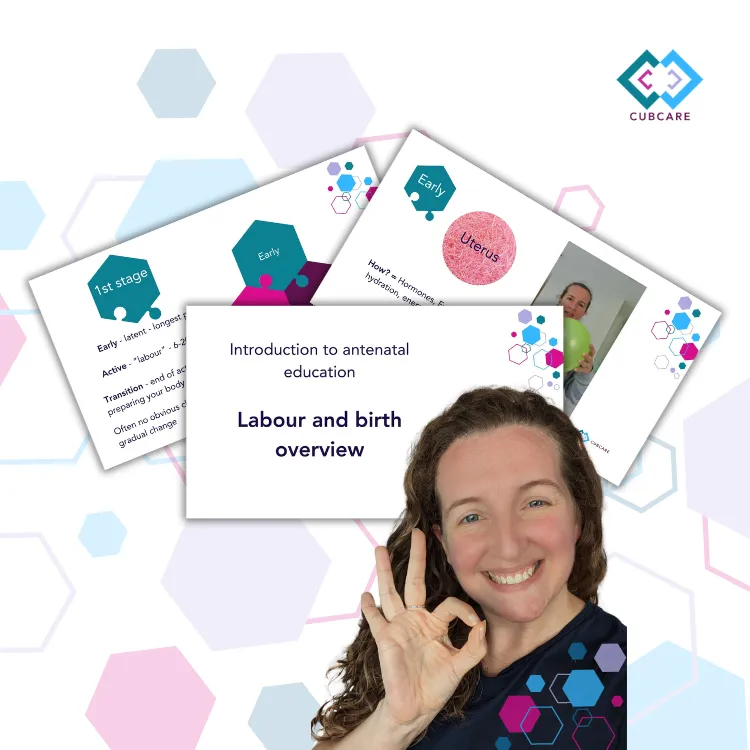
Labour and Birth
Watch our introduction to antenatal education webinar, our labour and birth overview - to start your antenatal education journey. Understanding the process, and what you can do to influence it.

Pregnancy Planner
Free Pregnancy Planner to help you prepare for a little one. Prepare your body, your mind, your finances and your home. Get organised, feel good and prepare for an active, positive birth.
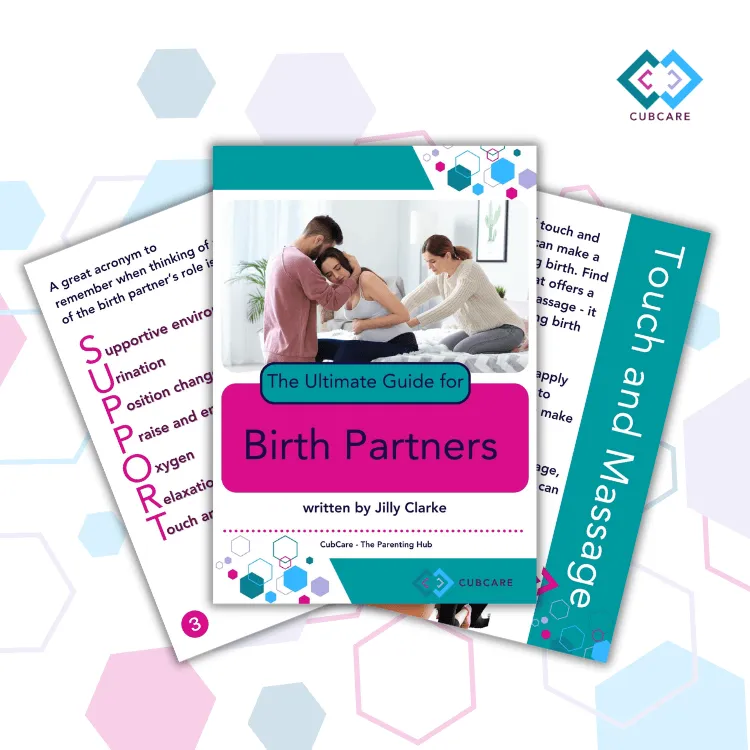
Birth Partner Guide
Your ultimate guide to being the best birth partner during pregnancy, birth and recovery. Learn what you need to do, and what you need to learn to be the best birth partner possible.
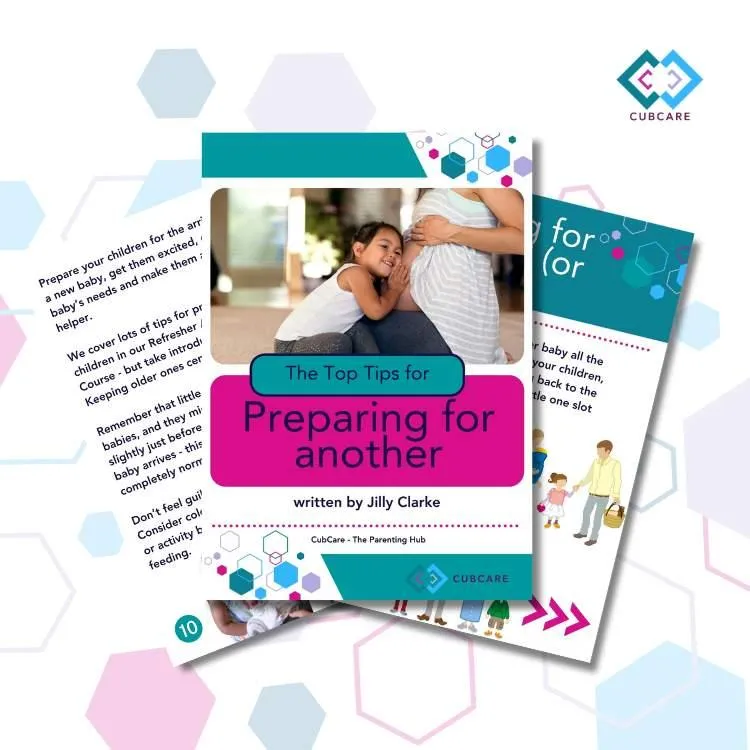
Expecting Again Guide
Your ultimate guide to preparing for another birth and an extra baby. Our top tips for navigating pregnancy and birth, and helping your older ones to transition into their new role as a big sibling.


Based in Welwyn Hatfield, offering local pregnancy support and doula services across Hertfordshire: St Albans, Hatfield, Welwyn Garden City, Potters Bar, Stevenage, Harpenden, Hitchin, Barnet, Mill Hill and surrounding areas.
Online antenatal and postnatal education available UK-wide.
© Copyright 2026 CubCare The Parenting Hub. CubCare is operated by The Birth and Baby Company Ltd. Company No. 15655287
Privacy Policy | Terms & Conditions | Medical Disclaimer | Inclusivity and Accessibility