We're an award winning Antenatal and Postnatal Education Platform 2025!
(read more here)
CubCare blogs.
From early pregnancy to newborn development.
Advice to help through pregnancy, birth and childhood.
BLOG
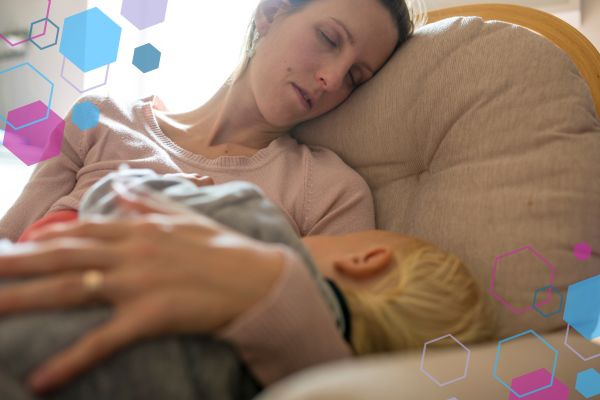
Pregnant Again? What Early Pregnancy Feels Like the Second Time Around
"Early pregnancy the second time isn’t just happening in your body. It’s happening in the middle of a life that already needs you at a pace never seen before — and that changes everything about how it feels." - Jilly Clarke, First Trimester and Refresher Antenatal Specialist, Antenatal Educator and Doula
You might have expected this part to feel familiar.
Same early weeks.
Same hormones.
Same body.
Instead, many people find themselves wrong-footed by how different early pregnancy feels the second time around — not dramatically different, not obviously worse, but heavier in ways that are hard to name.
The nausea arrives while you’re standing at the kitchen counter, trying not to gag as you butter toast for someone else.
The exhaustion settles behind your eyes before midday, but there’s no option to lie down — someone needs a snack, a nappy change, an answer.
You catch yourself counting hours until bedtime, then feel a flicker of guilt for wishing the day away.
And underneath all of it runs a quiet, persistent thought:
I’ve done this before. Why does it feel harder now?
Does early pregnancy really feel different the second time?
For many people, yes — and not because their body is doing something wrong.
Physiologically, early pregnancy unfolds in much the same way each time. Hormones rise rapidly. Blood volume begins to increase. Digestion slows. The nervous system becomes more reactive. Your body shifts into a state of intense internal work, most of it invisible from the outside.
What changes is the context those sensations land in.
The first time, symptoms could take up the whole day. You could cancel plans, lie down when your body asked, move slowly without explaining yourself. Even when it was hard, there was space around the experience.
The second time, there is far less room for symptoms to exist quietly. They have to be carried alongside someone else’s needs. You stay upright when your body would rather fold. You push through nausea because breakfast still needs making. You hold fatigue in your jaw and shoulders because there’s no pause button.
The physical work inside your body may be similar.
The circumstances you’re doing it in are not.
That difference alone reshapes how early pregnancy feels.

Early pregnancy nausea the second time: why it can feel sharper, heavier, or simply harder to manage
Many people are surprised by nausea the second time around. Some experience it as stronger. Others as more constant. Others as familiar but far more intrusive. Others don’t experience anything at all.
Recent research has helped clarify why nausea varies so much between pregnancies. A 2023 study published in Nature identified GDF15, a hormone produced by the placenta and fetus, as a major biological driver of nausea and vomiting in pregnancy. Crucially, the study showed that individual sensitivity to this hormone plays a significant role in symptom severity — meaning the same body can experience nausea very differently in different pregnancies.
This helps explain why there’s no reliable “pattern” to compare against. A previous pregnancy doesn’t predict how this one will feel.
But biology is only part of the picture.
The second time, nausea often lands in a body that is already giving. You are nauseous while lifting, wiping, carrying, soothing. You are managing your own symptoms while trying to stay emotionally available to someone else. There’s no reorganising the day around how you feel, because the day is already organised around another person.
Nausea doesn’t just feel physical in this context.
It feels interruptive.
It gets in the way.
It demands attention you don’t feel you have spare.

Why first-trimester fatigue often hits harder the second time
Fatigue in early pregnancy is profound. Your cardiovascular system is adapting. Your metabolism is shifting. Your body is building the foundations of the placenta and supporting rapid cellular growth.
Large studies consistently show that fatigue affects the vast majority of pregnant people, particularly in the first trimester, and that its severity is closely linked to disrupted sleep and overall symptom burden.
A 2021 cohort study published in BMC Pregnancy and Childbirth found that over 90% of participants reported significant fatigue in pregnancy, with poorer sleep quality strongly associated with worse fatigue.
The physiology doesn’t fundamentally change the second time around.
What changes is your capacity to recover.
In a first pregnancy, broken sleep and daytime exhaustion often exist in isolation. The body is depleted, but there may still be pockets of rest — lying down when needed, moving slowly, letting the day shrink around how you feel.
The second time, that recovery space is usually gone.
In real terms, that looks like this:
Some nights you sleep badly — broken by discomfort, strange dreams, or needing the toilet — and you start the day already depleted.
Other nights you sleep reasonably well, yet still wake with that same heavy, fogged feeling, because rest never really happened the day before.
By mid-morning, the weight settles behind your eyes. Your thoughts feel slower. Your body asks — clearly — for stillness. Or sleep. Or at least ten uninterrupted minutes where no one needs anything from you.
And you know you can’t give it that.
So you keep going. You remind yourself you’ve been pregnant before. You tell yourself this is familiar territory. And then there’s a moment — often unexpected — when your body insists on slowing anyway. The fatigue lands harder than you anticipated, and you feel a strange mix of frustration and disbelief.
That’s where guilt creeps in.
And self-doubt.
And the quiet fear that you’re failing at something you already proved you could do.
Not because you’re weaker.
But because the conditions are different.
The emotional weight of the first trimester the second time, that people don’t warn you about
Early pregnancy the second time often carries a kind of grief that’s hard to articulate.
Not grief for the pregnancy — but for the version of parenthood where your first child had you to themselves.
You might notice guilt rising when nausea makes you snappy. Sadness when you don’t have the patience you want. A sharp awareness, suddenly, of how much attention is already being asked of you.
You might think:
They didn’t ask for this.
And then feel ashamed for thinking it.
You love your child deeply.
You already care about the pregnancy you’re carrying.
And you’re holding both inside a body that feels stretched thin.
Early pregnancy the second time isn’t just happening in your body. It’s happening in the middle of a life that already needs you — and that changes everything about how it feels.

Why excitement for a second baby in the first trimester can feel quieter — and why that makes sense
Many people expect excitement to arrive faster the second time.
Often, it doesn’t.
Instead, early pregnancy feels practical. Measured. Heavy with anticipation rather than joy. Your mind moves ahead because it knows what pregnancy asks of you, what birth can take, and how intense the early months can be, how it will impact your existing child and their life.
The first time, excitement had space to stretch out. There was time to imagine, to daydream, to sit with the idea of what was coming.
The second time, that space is already occupied. By responsibility. By memory. By the knowledge of what lies ahead.
This doesn’t mean the pregnancy matters less.
It means you’re already oriented to the reality of what’s coming.
What actually helps in the first trimester the second time around
What helps here isn’t motivation or resilience. Most second-time parents already have plenty of both.
What helps is support that fits the life you’re actually living.
That might look like understanding what’s happening in your body early, so you can work with symptoms instead of fighting them — something many people value in the CubCare First Trimester Course, especially when nausea or fatigue is taking over day-to-day life.
It might also look like revisiting preparation for birth itself — not because you’ve forgotten how labour works, but because you are different now. Your body has history. Your expectations have shifted. Your priorities are clearer. That’s where the CubCare Antenatal Refresher Course often becomes useful — not as repetition, but as recalibration.
For many people, the second time isn’t about learning everything again.
It’s about learning what applies now.
Why second pregnancies still deserve proper support
Many second-time parents tell me they feel they should already know how to handle pregnancy — how to manage symptoms, how to pace themselves, how to cope.
But knowing what pregnancy involves doesn’t automatically give you more capacity to carry it easily, especially when your life now includes another child, more responsibility, and far less space to recover.
Experience doesn’t make pregnancy lighter.
It changes the questions you’re asking.
Support still matters — not because you’re inexperienced, but because this pregnancy is happening in a different body, inside a different life.
Support for a second pregnancy that recognises the unique challenges - for each stage
CubCare’s courses are designed to meet people where they are, not where the system assumes they should be.
• The First Trimester Course offers clear, grounded support for the early weeks — helping you understand symptoms, manage nausea and fatigue, and feel steadier at a stage that’s often minimised.
• The Antenatal Refresher Course supports those further along who don’t need everything from scratch, but do want space to reconnect with their body, their options, and the kind of birth they’re preparing for this time.
Neither assumes you’re fine just because you’ve done this before.
Both recognise that pregnancy still deserves care — especially when life is already full.
You don’t need to decide everything now.
You just need support that takes you seriously again.
Refresher Antenatal Course in person
Refresher Antenatal Course online
Birth Partner course (included in our Antenatal course)
Antenatal Course in person
Antenatal Course online

Easily navigate to our most popular Blog categories
Download our Freebies
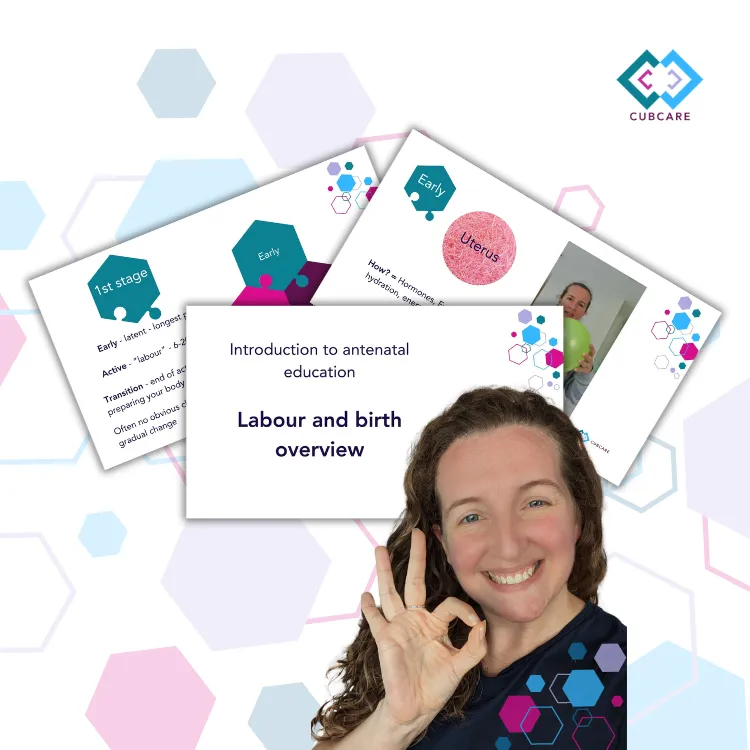
Labour and Birth
Watch our introduction to antenatal education webinar, our labour and birth overview - to start your antenatal education journey. Understanding the process, and what you can do to influence it.

Pregnancy Planner
Free Pregnancy Planner to help you prepare for a little one. Prepare your body, your mind, your finances and your home. Get organised, feel good and prepare for an active, positive birth.
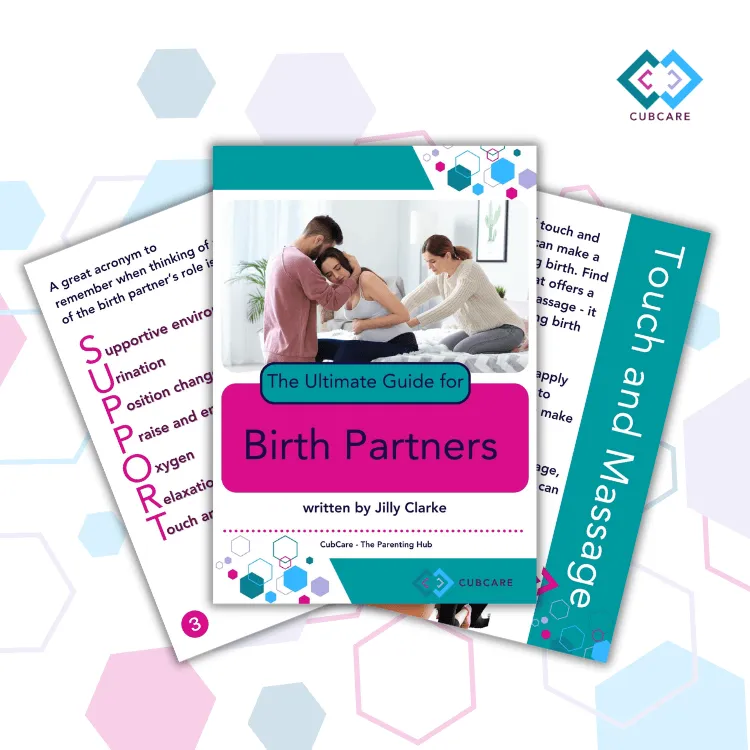
Birth Partner Guide
Your ultimate guide to being the best birth partner during pregnancy, birth and recovery. Learn what you need to do, and what you need to learn to be the best birth partner possible.
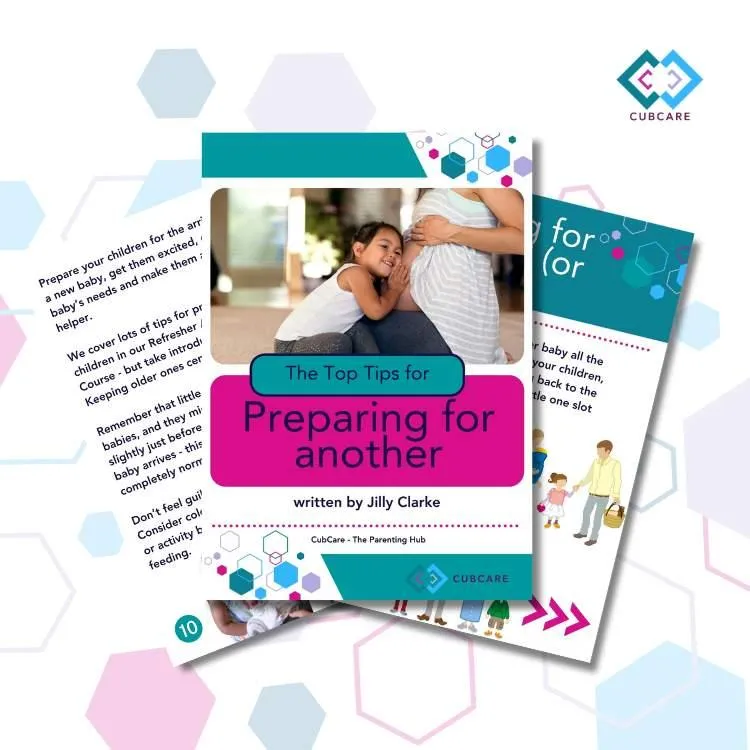
Expecting Again Guide
Your ultimate guide to preparing for another birth and an extra baby. Our top tips for navigating pregnancy and birth, and helping your older ones to transition into their new role as a big sibling.


Based in Welwyn Hatfield, offering local pregnancy support and doula services across Hertfordshire: St Albans, Hatfield, Welwyn Garden City, Potters Bar, Stevenage, Harpenden, Hitchin, Barnet, Mill Hill and surrounding areas.
Online antenatal and postnatal education available UK-wide.
© Copyright 2025 CubCare The Parenting Hub. CubCare is operated by The Birth and Baby Company Ltd. Company No. 15655287
Privacy Policy | Terms & Conditions | Medical Disclaimer | Inclusivity and Accessibility