
We're an award winning Antenatal and Postnatal Education Platform 2025!
(read more here)
CubCare blogs.
From early pregnancy to newborn development.
Advice to help through pregnancy, birth and childhood.
BLOG

Emotional support in labour: what your partner really needs from you
"As a birth partner, your job isn’t to make birth calm. It’s to stay calm enough that your partner’s body feels safe to keep going." - Jilly Clarke, Doula, Birth Partner Antenatal Specialist and founder of CubCare
I say this to birth partners a lot — usually when they’re trying to work out what emotional support is supposed to look like once labour stops being tidy or predictable.
Most people come into birth assuming emotional support means encouragement. Saying the right thing. Keeping things positive.
But labour doesn’t respond to motivation. It responds to whether the nervous system feels safe enough to continue.
That’s what emotional support actually shapes. Not mood, not attitude — but what the body is able to do.
Why does emotional safety affect how labour progresses?
Labour runs on hormones, and those hormones respond constantly to what’s happening in the body and the room around it.
When the nervous system feels safe, oxytocin rises. Contractions tend to organise. Focus narrows. Labour often finds its rhythm.
When safety drops, adrenaline steps in. Sensation feels sharper. Progress can slow. Staying with what’s happening becomes harder.
You can’t talk the body into feeling safe. You can’t reason with it or override it. Safety is assessed moment by moment through what’s sensed — tone of voice, pace of movement, familiarity, steadiness.
That’s why emotional support isn’t abstract. It’s practical, physical, and felt.

What does emotional support in labour actually look like?
It shows up in how you behave when things stop looking neat.
Staying close when your partner turns inward.
Slowing yourself down when the room speeds up.
Resisting the urge to fill silence because it makes you uncomfortable.
Sometimes it’s a quiet sentence. Sometimes it’s steady pressure through a contraction. Sometimes it’s simply staying where you are so they don’t have to search for you.
You’re not trying to improve what’s happening.
You’re helping their body feel safe enough to stay with it.
That’s the work. And it can be really difficult when you are a "fixer".

How does a birth partner influence labour hormones?
Oxytocin and adrenaline don’t coexist comfortably.
Oxytocin supports contractions, flow, and connection.
Adrenaline prepares the body to brace, protect, or interrupt.
The nervous system reads the room constantly. It takes in posture, movement, breathing, proximity. If you’re tense, pacing, hovering without purpose, or half-checked-out, your partner feels it immediately. When you slow yourself down — your breath, your movement, the way you take up space — their body often follows.
That’s why your own regulation matters.
Not because you need to be calm all the time, but because your steadiness gives your partner something reliable to orient around when everything else feels intense.
What should a birth partner say during labour — and what gets in the way?
The most useful language in labour is simple and familiar.
What often helps:
• “I’m here.”
• “You’re doing exactly what you need to.”
• “You're doing exactly what you need to do.”
• “Breathe with me. Breathe in, 2, 3, 4. Breathe out slowly, drop your shoulders.”
These don’t pull attention outward. They support staying in the sensations and the work.
Other phrases, even when well meant, tend to disrupt that:
• “Relax.”
• “Don’t cry.”
• “You’re scaring me.”
• “Stop making that noise.”
• “Just do what they say.”
They introduce urgency or judgement, and the body reacts to that immediately. Their body will tense, adrenaline will be released – and that can be counterproductive, actually slowing the process down.
If you’re unsure what to say, staying physically close or breathing where they can hear you often does more than words.

What if you don’t know how to help in the moment?
Most birth partners have moments where they feel lost.
Labour can be intense, unfamiliar, and emotionally charged. Without context, it’s easy to misread what you’re seeing — behaviour changes, sounds change, focus narrows — and assume something’s wrong.
Understanding the stages of labour changes how you interpret those moments. You recognise when contractions deepen, when someone goes quiet, when intensity ramps up. You’re less likely to panic just because things look different from earlier on.
That steadiness gives your partner fewer reasons to pull out of what their body is doing. Your job is to keep the labour flow going – and that is done with conviction – by understanding the process and knowing how to help move things along, and to make things more comfortable.
This is often what partners realise afterwards: once they understood what they were seeing, they could stay with their partner instead of hovering, freezing, or watching from the edges.
How do you prepare to give emotional support before labour?
This doesn’t begin in the birth room.
Midwives and clinicians may meet you for the first time when labour is already underway. They’re responsible for clinical care, and they may change as shifts change. You’re the familiar constant in a space that can start to feel unfamiliar very quickly.
Preparation sits in the relationship between you and your partner. Before labour, that looks like:
• knowing what helps when things feel overwhelming
• understanding how close they like you when pain/discomfort/illness intensity rises
• noticing whether steady touch helps (a hand on their back, pressure through the hips) or whether they prefer space
• recognising whether calm words help, or whether silence and breathing together works better
When you already have this understanding, support doesn’t need explaining. You can stay with them instinctively instead of trying to work it out while everything else is happening.
That familiarity is what keeps your partner oriented when new voices enter the room, equipment appears, or decisions start coming faster.
Why emotional support is part of how birth works
Emotional support shapes what the body is able to do in labour.
Large reviews of birth outcomes show that continuous, engaged support during labour is associated with shorter labours, fewer interventions, and more positive experiences overall.
The Cochrane Review on continuous labour support, analysing over 15,000 births, found clear benefits when someone stayed present and involved throughout labour.
A 2024 meta-analysis published in PLOS ONE reinforced this, linking continuous companionship with improved outcomes for both parent and baby.
Bodies work differently when they feel safe. Labour is no exception.
Midwives manage clinical care.
The birthing person leads the process.
The partner protects the conditions that allow both to work together.
What your partner will remember after the birth
They probably won’t remember every word you said.
They’ll remember whether you stayed when things got hard.
Whether your presence helped them keep going.
Whether they felt alone or supported.
That’s emotional support in labour.
Not a performance. Not a script.
Just steady attention that allows birth to unfold rather than unravel.
If you want to feel clearer and calmer stepping into that role, preparation makes a difference. The Birth Partner Course is built around exactly this — understanding how labour works and how to support it without getting in the way.
→ Explore antenatal course for couples / the Birth Partner Course
Step up and anchor the room
Birth doesn’t need another bystander. It needs someone who knows how to hold steady when the room gets loud, who understands what helps and what gets in the way, and who can support without disappearing or taking over.
That’s the difference between standing in the corner and being the person your partner trusts more than anything in that moment.
It’s not natural talent.
It’s preparation — and a willingness to step up.
If that’s who you want to be, you can get ready for it.
→ Explore the Birth Partner Course
Refresher Antenatal Course in person
Refresher Antenatal Course online
Birth Partner course (included in our Antenatal course)
Antenatal Course in person
Antenatal Course online

Easily navigate to our most popular Blog categories
Download our Freebies
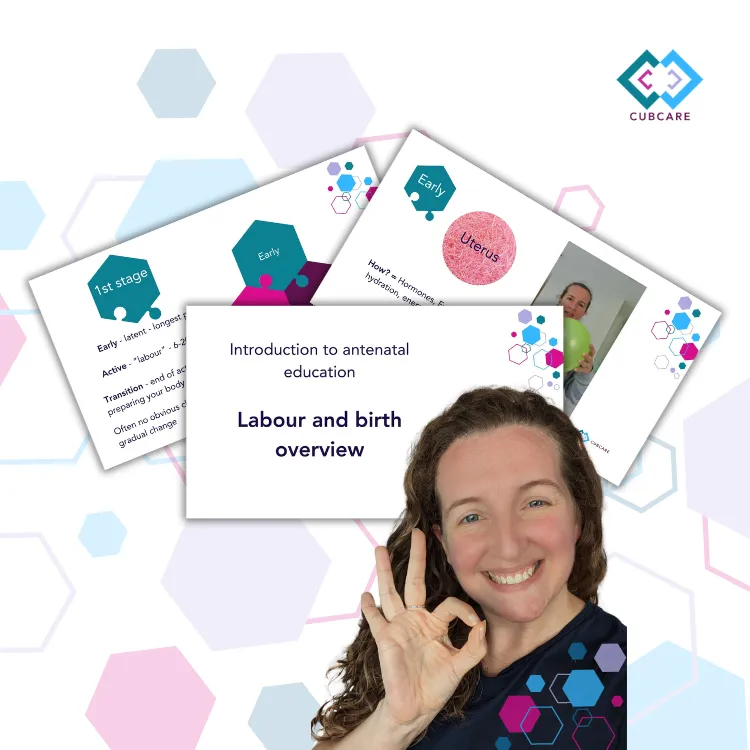
Labour and Birth
Watch our introduction to antenatal education webinar, our labour and birth overview - to start your antenatal education journey. Understanding the process, and what you can do to influence it.

Pregnancy Planner
Free Pregnancy Planner to help you prepare for a little one. Prepare your body, your mind, your finances and your home. Get organised, feel good and prepare for an active, positive birth.
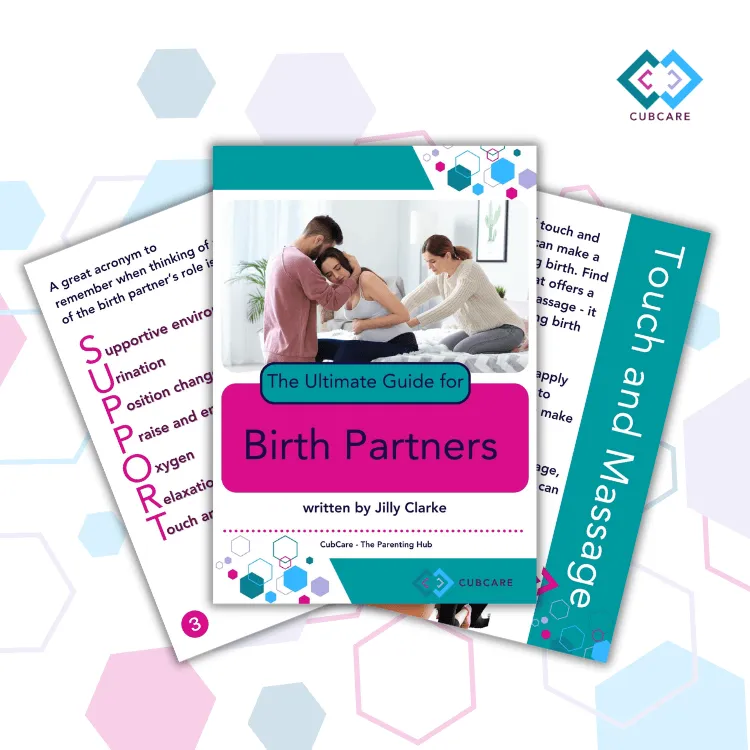
Birth Partner Guide
Your ultimate guide to being the best birth partner during pregnancy, birth and recovery. Learn what you need to do, and what you need to learn to be the best birth partner possible.
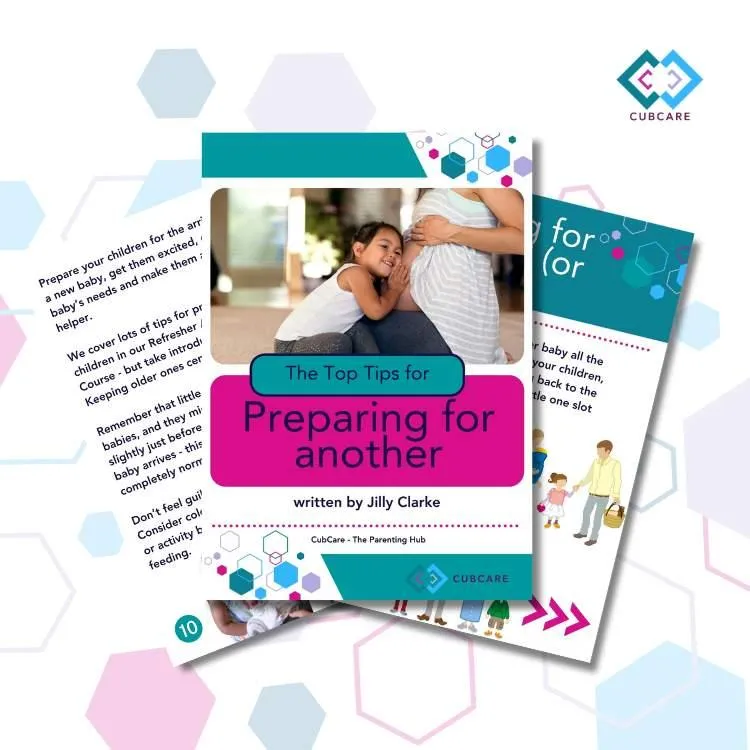
Expecting Again Guide
Your ultimate guide to preparing for another birth and an extra baby. Our top tips for navigating pregnancy and birth, and helping your older ones to transition into their new role as a big sibling.


Based in Welwyn Hatfield, offering local pregnancy support and doula services across Hertfordshire: St Albans, Hatfield, Welwyn Garden City, Potters Bar, Stevenage, Harpenden, Hitchin, Barnet, Mill Hill and surrounding areas.
Online antenatal and postnatal education available UK-wide.
© Copyright 2026 CubCare The Parenting Hub. CubCare is operated by The Birth and Baby Company Ltd. Company No. 15655287
Privacy Policy | Terms & Conditions | Medical Disclaimer | Inclusivity and Accessibility