
We're an award winning Antenatal and Postnatal Education Platform 2025!
(read more here)
CubCare blogs.
From early pregnancy to newborn development.
Advice to help through pregnancy, birth and childhood.
BLOG
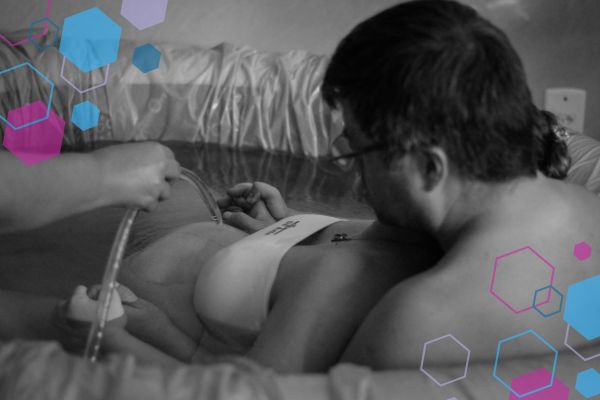
How birth actually works: a clear guide to labour physiology for modern parents
"Most people think labour starts when contractions get painful — but if you don’t understand what labour is trying to do, it’s very easy to think something’s wrong when it’s actually working." - Jilly Clarke, First Trimester Antenatal Specialist, Antenatal Educator and Doula
If you’re pregnant, you’ve probably been told what labour looks like long before anyone has explained how it works.
You’ve heard about contractions. You’ve heard about centimetres. You may already know what an induction is, what monitoring looks like, what happens if things are labelled “slow” or “not established”. What’s often missing is an understanding of what your body is trying to do underneath all of that.
And without that understanding, it’s very easy to lose confidence early — especially in a maternity system that now relies heavily on observation, thresholds, and time-based decision making.
This blog is about labour physiology. Not as an abstract concept, but as something happening inside you, often quietly at first, long before labour looks dramatic from the outside.
What actually starts labour in the body?
Labour doesn’t begin with pain. It begins with preparation.
In late pregnancy, your body, your baby, and the placenta are in constant communication. Hormonal shifts, changes in uterine sensitivity, cervical softening, and increasing coordination of muscle fibres all happen before contractions become strong or regular.
This preparatory phase can last days or weeks. It often goes unnoticed because it doesn’t match the story many people expect labour to follow.
From a physiological point of view, labour starts when:
• the cervix begins to soften and respond to hormonal signals
• uterine muscle cells become more responsive to oxytocin
• the baby’s position and pressure help stimulate further hormone release
None of this is visible on a monitor.
All of this is sensitive to what’s happening around you — a comment about how painful birth is that heightens fear and adrenaline, a conversation about baby’s size, pressure around timelines or induction. These cues can shift how safe your body feels, and that can affect how smoothly early labour unfolds.
This is why early labour so often gets dismissed, because the work is so subtle. And so open to interruptions.
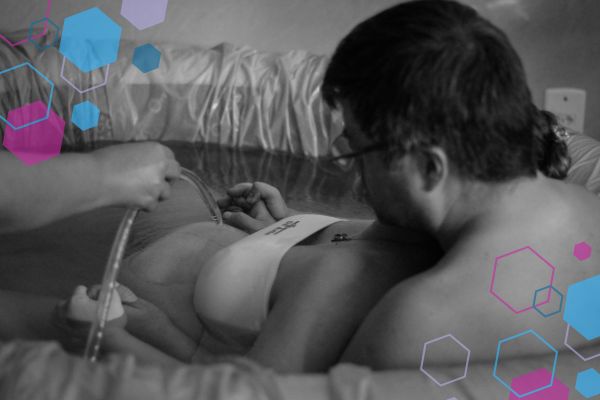
Why early labour feels confusing (and why that’s normal)
Early labour is not designed to be impressive. It’s designed to get everything prepared for an efficient active labour.
Contractions may be irregular. They may stop and start. They may feel uncomfortable rather than intense. You might sleep through some of them. You might doubt whether they “count”.
Physiologically, this stage is doing a lot of the background work. Early contractions allow:
• the cervix to soften and shorten
• the uterus to practise coordinated contractions
• the baby to settle into an optimum position more deeply into the pelvis
From the outside, this can look unproductive. From inside the body, it’s foundational.
Many people feel most unsettled here — not because their body is failing, but because the more subtle signals they’re getting don’t match what they’ve been led to expect of labour.

How active labour builds on early labour physiology
Active labour doesn’t arrive out of nowhere. It builds.
As contractions become stronger and more regular, your body shifts into a different hormonal state. Oxytocin release becomes more rhythmic. Endorphins rise. Focus narrows. Many people describe a clear internal shift — not just in sensation, but in awareness.
This is when cervical dilation becomes more measurable. It’s also when labour tends to attract more attention, monitoring, and clinical involvement.
Understanding that active labour depends on the groundwork laid earlier helps explain why rushing, disturbing, or overriding that early phase can change how labour unfolds later.
What the baby is doing during labour
Labour is not something your body does to your baby. It’s something your body and your baby do together.
As labour progresses, the baby:
• moves down through the pelvis
• rotates to navigate the curves of the birth canal
• responds to contractions by adjusting position
This is biomechanics as much as physiology. Position, space, movement, and time all matter.
When labour stalls or feels inefficient, it’s often because this coordination is being disrupted — not because anyone has done anything wrong, but because birth is a complex physical process happening within real anatomical variation.
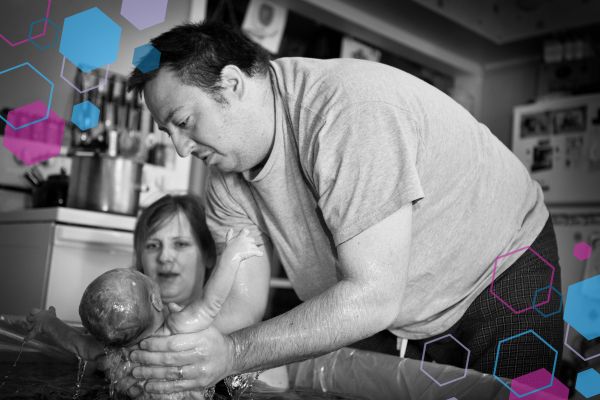
Why labour physiology often clashes with modern maternity care
Modern maternity care saves lives. It also operates under pressure.
UK data shows that intervention in labour is common. According to the National Maternity and Perinatal Audit (NMPA), a significant proportion of births involve induction, augmentation, operative vaginal birth, or caesarean section, with wide variation between NHS trusts.
These interventions are sometimes essential. They also change the physiology of labour.
Time limits, contraction measurements, and cervical checks are tools — but they don’t always reflect the internal work your body is doing. When physiology is poorly understood, variation can be mistaken for failure.
This matters, because confidence in labour is fragile. Once someone believes their body isn’t working, everything feels harder.
Why understanding labour physiology protects confidence during birth
Most people think labour starts when contractions get painful — but if you don’t understand what labour is trying to do, it’s very easy to think something’s wrong when it’s actually working.
I see what happens when people don’t have this framework.
They enter labour already braced for things to go wrong. They doubt early signs. They hand over confidence quickly because no one has explained that labour is layered, adaptive, and deeply individual.
Understanding physiology doesn’t mean refusing medical care. It means recognising when your body is doing exactly what it’s designed to do — even if it doesn’t look dramatic yet.
When parents understand labour physiology, they engage differently with care. They’re more grounded, more collaborative, and less likely to interpret normal variation as personal failure.
Why I teach labour this way
I don’t teach labour as a checklist or a performance.
I teach it as a process your body already knows how to begin — one that benefits from understanding, support, and space.
When people grasp what labour is trying to do, they move through it with more trust. Not blind trust — informed trust. And that changes how the whole experience feels, whatever form the birth eventually takes.
This is the foundation of how I teach inside my full antenatal course.
We take labour physiology out of theory and into real, usable understanding — so you know what your body is doing, how to support it, and how to navigate care when decisions arise.
Check out the other blogs I've written.
Explore the Refresher Antenatal Course
Refresher Antenatal Course in person
Refresher Antenatal Course online
Birth Partner course (included in our Antenatal course)
Antenatal Course in person
Antenatal Course online

Easily navigate to our most popular Blog categories
Download our Freebies
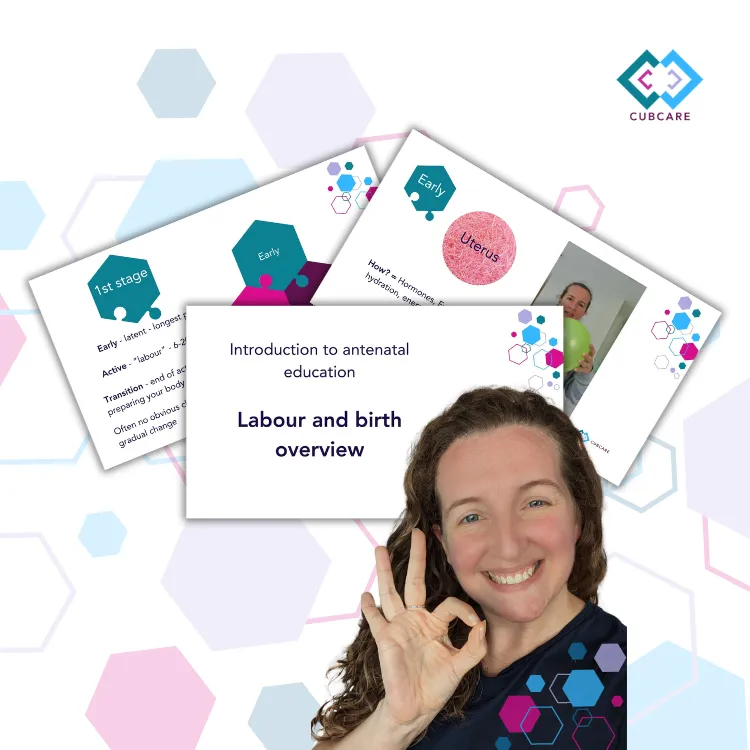
Labour and Birth
Watch our introduction to antenatal education webinar, our labour and birth overview - to start your antenatal education journey. Understanding the process, and what you can do to influence it.

Pregnancy Planner
Free Pregnancy Planner to help you prepare for a little one. Prepare your body, your mind, your finances and your home. Get organised, feel good and prepare for an active, positive birth.
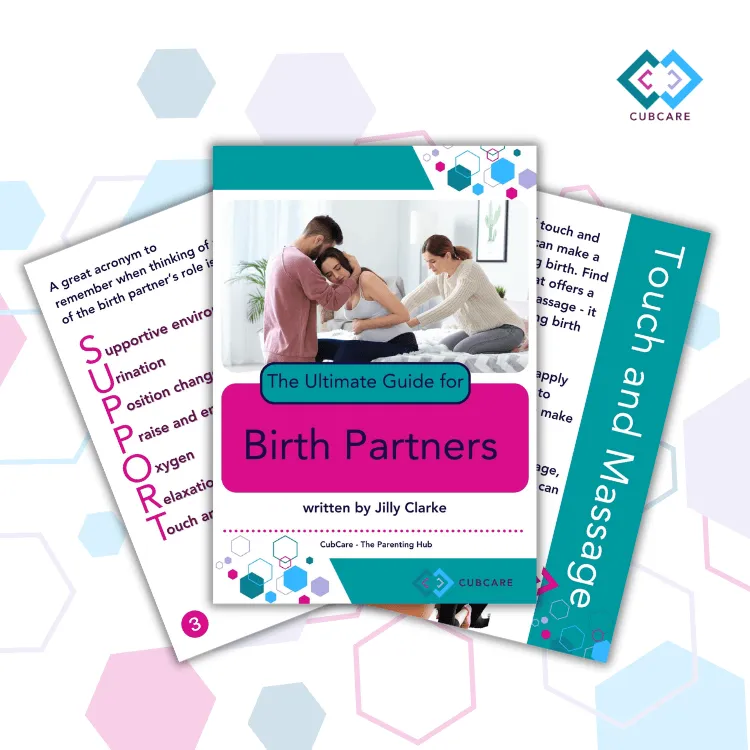
Birth Partner Guide
Your ultimate guide to being the best birth partner during pregnancy, birth and recovery. Learn what you need to do, and what you need to learn to be the best birth partner possible.
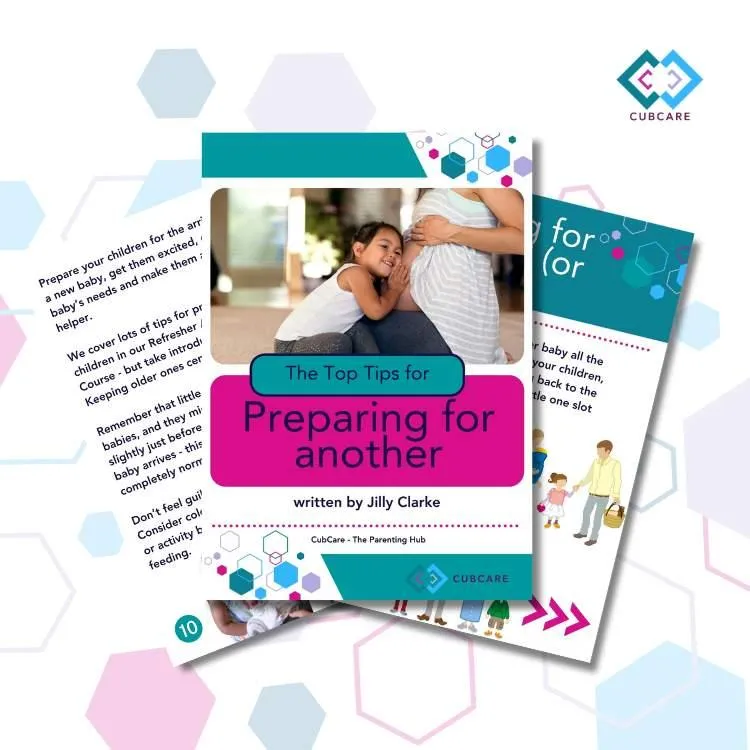
Expecting Again Guide
Your ultimate guide to preparing for another birth and an extra baby. Our top tips for navigating pregnancy and birth, and helping your older ones to transition into their new role as a big sibling.


Based in Welwyn Hatfield, offering local pregnancy support and doula services across Hertfordshire: St Albans, Hatfield, Welwyn Garden City, Potters Bar, Stevenage, Harpenden, Hitchin, Barnet, Mill Hill and surrounding areas.
Online antenatal and postnatal education available UK-wide.
© Copyright 2025 CubCare The Parenting Hub. CubCare is operated by The Birth and Baby Company Ltd. Company No. 15655287
Privacy Policy | Terms & Conditions | Medical Disclaimer | Inclusivity and Accessibility